Knowing how to share audio in a Microsoft Teams meeting is essential when you want participants to hear sound from a video, a music file, or a media demo. By default, Teams does not broadcast your computer audio when you share a screen — the result is the classic “why can’t anyone hear my video?” moment that derails presentations every week. This guide walks through the three methods to share audio cleanly in a Teams meeting, plus the troubleshooting flow when audio still does not reach the room.
We cover the desktop app flow (the most common path), the web app caveats, the mobile limitations, the admin-side PowerShell policies that govern audio sharing tenant-wide, and the best practices that separate a polished demo from a chaotic one. For more Teams meeting tips, see our guide on organising a Teams meeting and file sharing in Microsoft Teams.
🛡️ Free: M365 Tenant Security Audit Checklist
17-page PDF with 50 hands-on checks covering Entra ID, Exchange Online, SharePoint, Teams, Intune, license waste, and audit logging. PowerShell commands included. Built from 60+ real tenant audits at Wintive.
🤔 Why participants cannot hear audio when you share a video
Microsoft Teams treats screen sharing and audio sharing as two distinct streams. Specifically, when you click Share Content and pick a window or screen, Teams broadcasts the visual feed but leaves your computer’s sound output disconnected from the meeting. Therefore, the video plays on your end — you hear the audio locally — while remote participants see a silent video, which is rarely what anyone intends.
The fix is a single toggle named “Include computer sound” in the Share Content panel. However, the toggle resets to off every time you start a new screen share — it does not persist between meetings or even between consecutive shares within the same meeting. Indeed, this default-off behaviour is intentional for privacy reasons (so you do not accidentally broadcast a Slack notification or Spotify track), but it catches every new presenter at least once.
🚦 Three ways to share audio in a Teams meeting
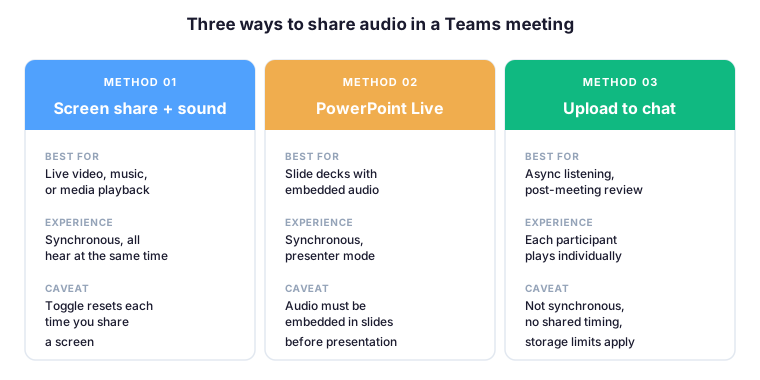
Microsoft Teams exposes three distinct paths to share audio with meeting participants, each suited to a different scenario. For example, screen sharing with the “Include computer sound” toggle is the most common path for a live video or a music demo. In contrast, PowerPoint Live with embedded audio is the cleanest option for slide decks where the audio is part of the narrative. Specifically, uploading the audio file to the meeting chat is the right pick for asynchronous review where each participant plays the file on their own time.
🖥️ Share audio via the Teams desktop app
The desktop app is the recommended path for sharing audio in a Teams meeting because it exposes the full Share Content panel with the audio toggle prominently displayed. The flow takes four steps and works for any video, music file, or browser-based media playback.
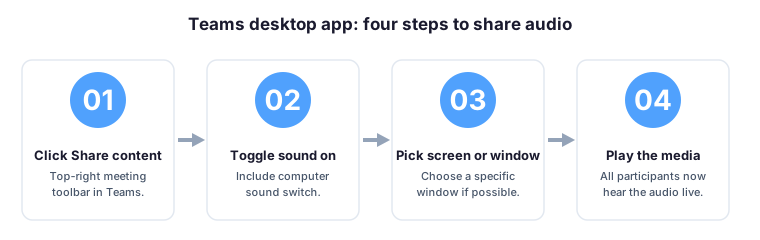
- Click the Share Content button in the top-right toolbar of your active Teams meeting. The Share Content panel slides in from the right side.
- Toggle Include computer sound to ON. The switch sits at the top of the Share Content panel — it is small, easy to miss, and resets every time. Therefore, treat this toggle as the first thing you check before picking a screen.
- Pick a specific window rather than the full screen. Sharing a single window uses less bandwidth and hides incoming notifications from participants. For example, if you are presenting a YouTube video, pick the browser tab window, not the full desktop.
- Play the media. All meeting participants now hear the audio live as you play it, synchronised with the visual feed. The local audio output continues to play through your speakers or headphones too.
If the toggle was off when you started, stop the share and start again with the toggle enabled — there is no way to flip it on mid-share. Furthermore, the audio share works for any application that outputs sound to your default audio device: a video file, a streaming service, a music player, or a browser tab.
🌐 Share audio via the Teams web app
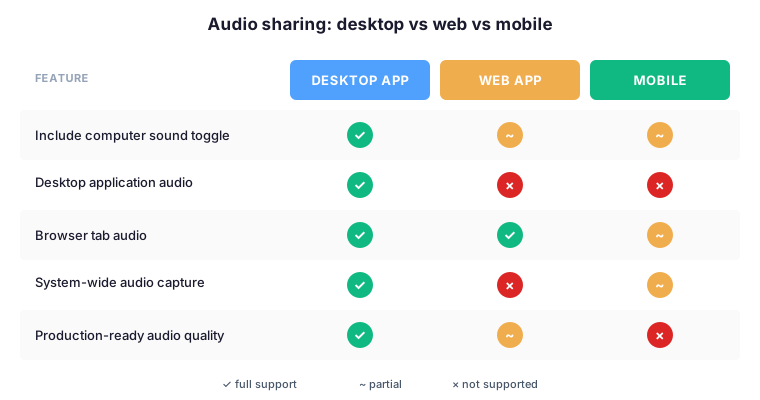
The Teams web app supports the “Include computer sound” toggle but only in Edge and Chrome browsers. However, the experience is more constrained than the desktop app: tab audio only is reliable, while system-wide audio capture depends on browser permissions and operating system support. Therefore, for any presentation where audio quality matters, prefer the desktop app over the web app.
Specifically, in the web app the audio toggle appears only when you choose to share a Chrome or Edge browser tab — not when you share a window or the entire screen. For example, sharing a YouTube tab works fine, but sharing a desktop video player typically does not pass audio through the web app.
📱 Share audio on Teams mobile
The Teams mobile apps for iOS and Android can share screen content but the “Include device sound” feature is more limited. Specifically, on iOS the audio capture works through the Screen Broadcast control center widget with Teams selected, and on Android it depends on the device manufacturer. Therefore, for any meeting where audio is critical, present from a desktop or laptop running the Teams desktop app.
⚙️ Configure Teams audio policies (admin, PowerShell)
Tenant administrators can govern who is allowed to share audio in Teams meetings via the CsTeamsMeetingPolicy cmdlets in the Microsoft Teams PowerShell module. Specifically, the relevant property is AllowSharedNotes and ScreenSharingMode which controls whether desktop audio capture is permitted at the policy level.
To audit the meeting policies in your tenant and see which one applies to a specific user:
Connect-MicrosoftTeams
Get-CsTeamsMeetingPolicy | Select-Object Identity, ScreenSharingMode, AllowParticipantGiveRequestControl
Get-CsOnlineUser -Identity "user@contoso.com" | Select-Object UserPrincipalName, TeamsMeetingPolicy
To restrict screen sharing (and therefore audio sharing) to a specific group or to disable it for guest users on a tagged policy:
Set-CsTeamsMeetingPolicy -Identity "RestrictedUsers" -ScreenSharingMode "SingleApplication"
Grant-CsTeamsMeetingPolicy -Identity "guest@contoso.com" -PolicyName "RestrictedUsers"
For the full Teams admin context, see the Microsoft Teams policy packages documentation and our guide on top PowerShell commands for Microsoft 365.
💡 Audio sharing best practices
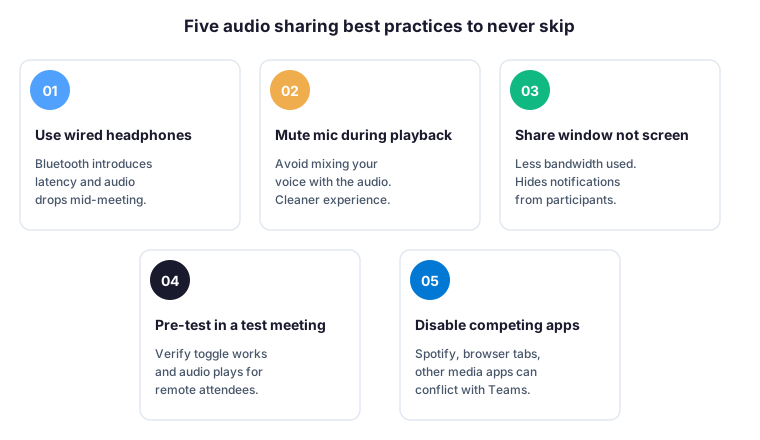
- Use wired headphones, not Bluetooth. Bluetooth introduces latency and audio drops mid-meeting, especially when you also stream video. Therefore, switch to a wired headset for any meeting where audio quality matters — webinars, music demos, or podcasts.
- Mute your microphone during playback. When you share audio from a video, your own voice picked up by the microphone gets mixed with the broadcast audio, which sounds messy on the receiving end. For example, mute the mic, play the clip, then unmute to discuss.
- Share a window, not the full screen. Sharing a specific window uses less bandwidth and prevents notifications from leaking to participants. Specifically, pick the browser tab or media player window rather than the entire desktop.
- Pre-test in a Teams test meeting. The Teams test call feature lets you verify that your audio setup actually works before the live meeting. Indeed, this saves the awkward “can anyone hear me?” opening every presenter dreads.
- Disable competing audio applications. Spotify, browser tabs with autoplaying ads, system notification sounds — all of these can leak into the meeting audio stream. Therefore, close them before you start to share.
🛠️ Audio not heard? Troubleshooting flow
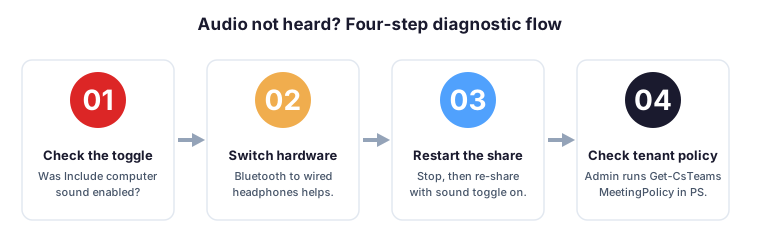
When participants report they cannot hear the audio, run through the four-step diagnostic flow above in order. Specifically, the most common root cause is the toggle being off — check this first before assuming a hardware or policy problem. However, if the toggle was on and audio still does not pass through, switch from Bluetooth to wired audio output. Furthermore, restart the share completely (stop, then re-share with the toggle on) rather than trying to fix the active session. Therefore, if all of the above fails, escalate to the IT admin to verify the tenant Teams meeting policy.
📋 Audio sharing methods comparison
The wintive-table below summarises when to use each audio sharing method — useful for picking the right approach based on your meeting type and the device you are presenting from.
| Method | Best for | Audio quality | Caveat |
|---|---|---|---|
| Screen share + Include sound | Live video, music demo | Synchronous, high | Toggle resets each share |
| PowerPoint Live | Slide decks with embedded audio | Synchronous, high | Audio embedded in slides |
| Upload to chat | Async listening | Each plays individually | No shared timing |
| Teams web app | Browser tabs only | Variable | Edge or Chrome required |
⚠️ Wintive take: common audio sharing pitfalls
Two pitfalls show up in tickets every week. Specifically, the most common one is the presenter who clicks Share Content, picks a window, plays the video, and only realises five seconds later that nobody heard a thing. However, the fix is to stop the share and restart it with the audio toggle on — there is no way to retroactively enable audio on an active share. Therefore, build a habit: before every screen share, verify the toggle position.
The second pitfall is the meeting where the presenter shares the full desktop and accidentally broadcasts a personal Slack notification, an email preview, or worse — a Spotify song that plays during a quiet moment. For example, sharing a specific window rather than the entire screen prevents this category of incident entirely. Furthermore, mute system notification sounds at the operating system level before any presentation that involves audio sharing.
🤔 Frequently asked questions about sharing audio in Teams
Microsoft Teams treats screen sharing and audio as separate streams by default. When you click Share Content, Teams broadcasts the visual feed only. Therefore, you must enable the Include computer sound toggle in the Share Content panel before participants can hear any audio from your video or media file.
No. The Include computer sound toggle resets to off every time you start a new screen share, even within the same meeting. Therefore, treat checking this toggle as the first step of every share content action when audio is involved. Building this habit eliminates 80 percent of share audio incidents.
Yes, but only in Edge or Chrome browsers and only when sharing a browser tab. The Include computer sound toggle does not appear when sharing a window or the entire screen via the web app. Therefore, for any meeting where audio quality matters, prefer the Teams desktop app over the web version.
Use a wired headset rather than Bluetooth, mute your microphone while audio plays, share a specific window rather than the entire desktop, and close competing audio applications such as Spotify or browser tabs with autoplay. Pre-test the setup in a Teams test meeting to verify audio passes through correctly.
Yes, indirectly. Administrators control screen sharing through the CsTeamsMeetingPolicy cmdlet in Microsoft Teams PowerShell. Setting ScreenSharingMode to Disabled prevents all screen and audio sharing for users assigned to that policy. Granular per-user policies allow tighter control for guests, students, or restricted groups.
📚 What to read next
Continue your Teams reading with our guides on file sharing in Microsoft Teams, tips for organising a Teams meeting, and enabling recording in Teams.