
Your best pitch in months just landed a callback. Then procurement sends a marketing agency security questionnaire: forty rows asking how you protect data, devices and access. Therefore the deal no longer rests on your creative. It rests on what you can prove.
This guide is written for the founder and the account lead, not the IT contractor. Specifically, it explains what buyers now ask and how a Microsoft 365 audit answers the form.
🎯 A big client just sent a security questionnaire you cannot fully answer?
Wintive gets US marketing and creative agencies review-ready. Specifically, the work covers multi-factor sign-in, endpoint defence, tested backups and a documented response plan. Furthermore, it produces the evidence a buyer asks for, at a predictable monthly cost.
📅 Book a Free 30-Min Call | 💬 Chat on WhatsApp | See Our Plans →
This guide maps what enterprise buyers now ask, the control that decides pass or fail, and the gap between claiming a control and proving it. Furthermore, it shows what a Microsoft 365 audit puts in front of the buyer, what a fumbled answer really costs, and a ninety-day path to an audit-ready file.
📈 Why a marketing agency security questionnaire now wins or loses deals
📌 TL;DR — a marketing agency security questionnaire in 2026: Enterprise buyers now gate onboarding on documented controls — multi-factor sign-in, endpoint defence, tested backups and a written response plan. As a result, agencies that cannot prove them stall in procurement. Therefore a Microsoft 365 audit that documents each control wins the account.
Enterprise buyers increasingly gate vendor onboarding on a documented review, and the cost of a mishandled breach keeps climbing, per published industry research. However, the form still looks like routine paperwork.
The review that quietly became a dealbreaker
A year ago a buyer took your word for it. However, that era is over. Specifically, their own insurers and auditors now push the same questions down to every supplier. As a result, the questionnaire became a gate, not a formality.
This matters because the stakes are concrete. Specifically, a weak answer can freeze a signed-off deal in legal for weeks. Furthermore, a wrong answer can cost you the account to a rival who answered cleanly. Therefore the review is now a revenue decision, even for a ten-person shop. In practice, the agency that treats it as an afterthought is the one that loses the deal. Specifically, the buyer reads silence as risk, not as a small gap. Furthermore, a stalled review rarely restarts on its own. Therefore the agency that prepares the evidence early keeps control of the timeline.
📋 What enterprise buyers now ask for
The form has grown teeth. Specifically, most buyers now expect the same core controls, and they ask about each one by name. Furthermore, they want the answer backed by proof. As a result, a vague reply reads as a no.
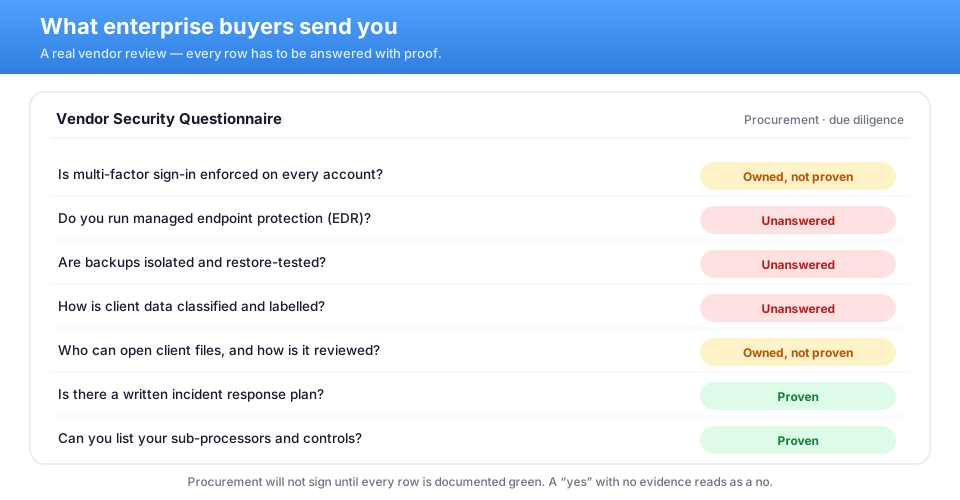
Read that as a scorecard, not a wish list. However, do not let the length rattle you. Specifically, a single Microsoft 365 plan already covers most of these controls. Furthermore, the rest are policy and process, not costly new tools. Therefore the work is largely turning things on and writing them down. As a result, the gap is usually smaller than it first looks. Specifically, most of the eight controls live inside a plan you already own. Furthermore, the work is switching them on and writing them down, not buying more tools. As a result, an audit closes the gap in days, not months.
Which questions trip teams up most
The form can look simple, yet a handful of rows decide most outcomes. Specifically, buyers word them to expose the gaps an agency tends to gloss over. Furthermore, each one now expects a document behind it, not a confident guess. Therefore it pays to read them closely before you reply.
- Is multi-factor sign-in enforced on email, file storage and every admin account?
- Are your backups isolated, and when did you last test a full restore?
- Which tool watches your devices, and who reviews the alerts each day?
- Where is your written response plan, and when was it last reviewed?
- Through what steps do you remove access the moment a freelancer leaves?
None of these reward a vague reply. Notably, a wrong answer here is what later sinks a deal you assumed was closed. Furthermore, keeping your answers consistent across the whole form matters as much as any single one. As a result, the agencies that gather the evidence first move through the rest quickly. In practice, the preparation is the hard part, and the form becomes a formality. Specifically, each answer should point to a screenshot or a short policy, not a promise. Furthermore, consistency across the whole form matters as much as any single reply.
🔐 The control that decides pass or fail
One control outweighs the rest. Specifically, it is multi-factor sign-in. Furthermore, it is the first thing a buyer checks and the first thing an attacker tests. As a result, it sits at the centre of nearly every review decision.
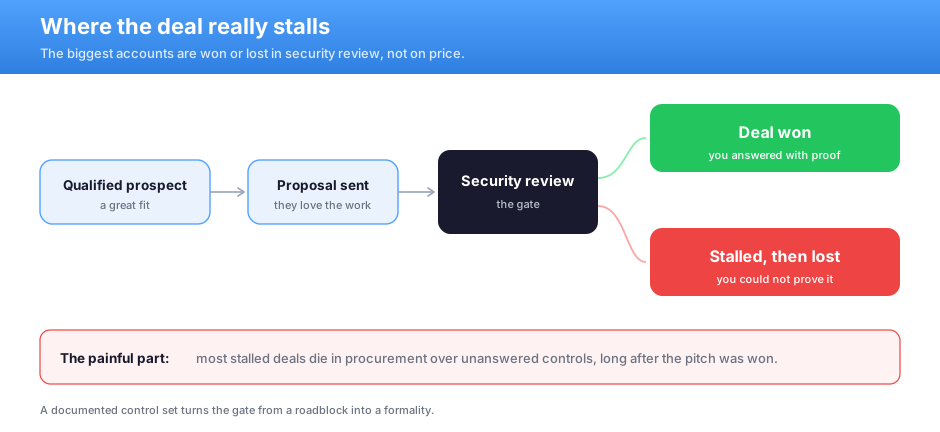
The pattern is hard to ignore. Notably, most deals that stall in procurement die over unanswered controls, not over price. However, many agencies never see it coming. By contrast, the pitch was won weeks earlier. Therefore the gap between a great proposal and a closed deal is often a single security gate. Specifically, one weak answer can outweigh a dozen strong ones. Furthermore, buyers score the riskiest control first and stop if it fails. Therefore fixing that gate is the highest-return move on the list.
MFA and the marketing agency security questionnaire
On any marketing agency security questionnaire, multi-factor sign-in is non-negotiable. Specifically, Microsoft 365 Business Premium enforces it across the whole team. Furthermore, Microsoft Entra ID can require it on email, file access and every admin account. Therefore you clear the single most scrutinised row on the form. In practice, this one change moves more reviews from stalled to passed than any other. Specifically, it is the first box a reviewer checks and the easiest to verify. Furthermore, Microsoft 365 Business Premium enforces it across the whole team in an afternoon. As a result, it is both the most scrutinised control and the quickest to fix.
🧾 Available is not the same as proven
Here is the trap that catches careful teams. Specifically, buyers no longer accept a yes on the form. Furthermore, they want screenshots, a written policy and proof the control runs everywhere. As a result, a feature you bought but never enforced counts as nothing.
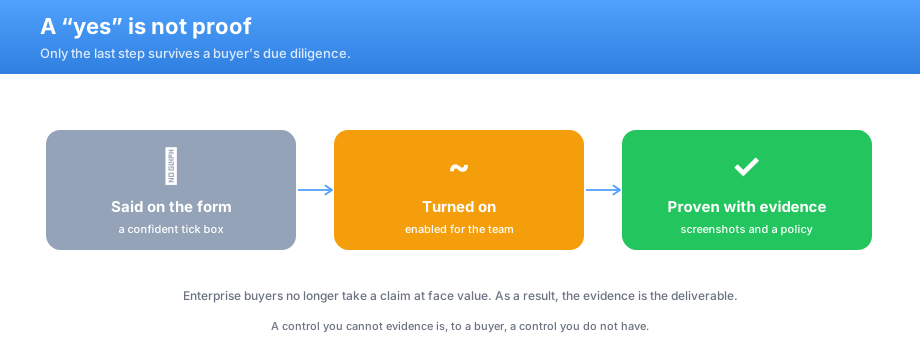
Think of it as three steps, not one. Specifically, a control can be claimed, then turned on, then proven with evidence. However, only the last step satisfies the buyer. By contrast, the first two feel like progress but prove nothing. Therefore the real deliverable is the evidence, not the licence you already pay for.
What we see across the 60+ tenants we manage: most agencies are closer to compliant than they fear, but cannot prove it. Specifically, the common mistake is owning a control and never documenting it. In practice, an unproven control can silently fail the whole questionnaire, even with the tool right there. Notably, the same evidence maps to SOC 2 and NIST language enterprise clients already recognise. Therefore Wintive turns the half-on setup into a documented one. Then the form answers itself.
A marketing agency security questionnaire wants proof, not a tick box
This is the core shift behind every marketing agency security questionnaire. Specifically, the burden of proof now sits with you. Furthermore, a control you cannot evidence is, to a buyer, a control you do not have. Therefore documentation is part of the deliverable. As a result, the agencies that keep tidy proof clear review faster and argue less. Specifically, the evidence pack you build for the form is the same one you reach for during an incident. Furthermore, it stays useful long after the deal closes. Therefore the documentation is an asset, not a one-off chore.
🧩 The controls your Microsoft 365 plan already covers
The good news is that you are not starting from zero. Specifically, one business-grade Microsoft 365 plan already carries most of the controls. Furthermore, each maps cleanly to a row on the form. As a result, the audit is largely about switching them on and capturing the proof.
| Questionnaire question | Microsoft 365 control | What it proves |
|---|---|---|
| Multi-factor sign-in | Business Premium + Entra ID | Enforced on every account |
| Endpoint protection (EDR) | Microsoft Defender | Devices monitored and logged |
| Managed devices | Microsoft Intune | Encryption and remote wipe |
| Client data classification | Microsoft Purview | Labels and an access trail |
| Documented response | Audit report + policy | A plan the buyer can read |
Notice how little of this is new spend. Specifically, most agencies already pay for the licences but use a fraction of them. Furthermore, the value sits in configuration, not in buying more software. Therefore the audit unlocks protection you have funded but never switched on.

There is a growth angle here, beyond one deal. Specifically, the same proof answers the next buyer, and the one after that. Furthermore, clients in healthcare or finance bring HIPAA and SOC 2 expectations of their own. As a result, the evidence that wins this account helps you win the whole segment.
Turning licences you already pay for into proof
Most agencies are quietly paying for protection they never switched on. Specifically, a Business Premium seat already carries most of the controls a buyer asks about. However, an unconfigured licence proves nothing on the form. Therefore the money is spent, but the credit goes unclaimed.
The audit closes that gap without new spend. Specifically, it enables each feature, then captures the screenshot and the written policy that evidence it. Furthermore, it records who holds access and how devices are managed, in language a buyer expects to read. As a result, the licence you pay for every month becomes the proof you were short of.
In practice, this is the cheapest move available to you. By contrast, it costs nothing beyond an afternoon of careful configuration. Notably, it also tightens your day-to-day security while it satisfies the form. Therefore the next review improves before you spend a single extra dollar. Notably, it also tightens your day-to-day security while it satisfies the buyer. As a result, the same configuration protects the work and wins the review.
💾 Backups a buyer will actually accept
Backups are where many reviews come undone. Specifically, buyers do not just ask whether you back up. Furthermore, they ask whether the copies are isolated and whether you have ever tested a restore. However, most small teams have never run that test.

The fix is straightforward and worth the hour. Specifically, you keep an isolated copy that ransomware cannot reach. Furthermore, you run a test restore and keep the result on file. Therefore you answer the backup row with evidence, not hope. In practice, a single documented restore turns a weak answer into a strong one. Specifically, buyers ask whether backups are isolated and whether a restore has ever been tested. Furthermore, most teams have never run that test. Therefore a single documented restore moves the answer from hopeful to provable.
💸 The marketing agency security questionnaire and the cost of fumbling it
Founders think in deals, so here is the math. Specifically, a fumbled questionnaire is not one cost. It is a stalled deal, weeks of lost momentum, and an account that drifts to a rival. Furthermore, the work to answer it late is far harder than the work to be ready.
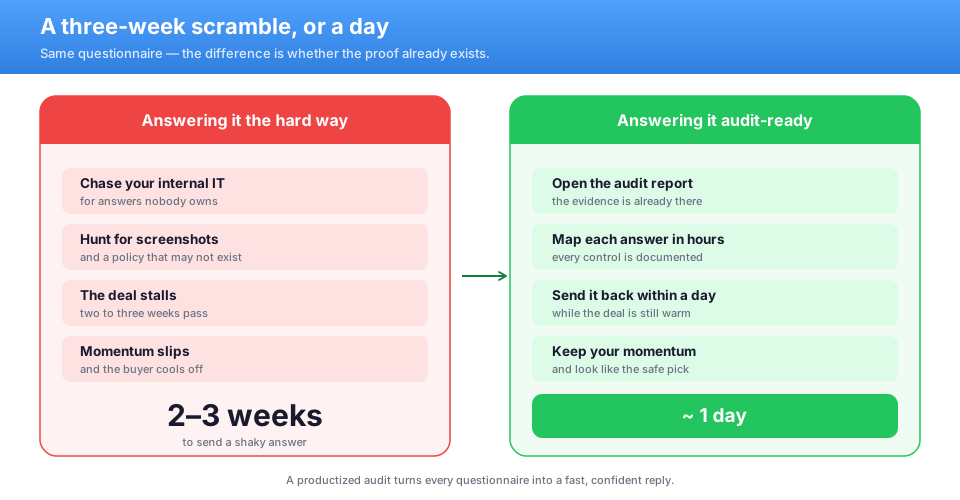
Set that against the cost of being ready. Specifically, a one-time audit and Microsoft 365 Business Premium are a small, predictable amount per user, per month. Furthermore, there is no large CapEx and no on-prem hardware to run. By contrast, it is an OpEx line you can forecast. Therefore the total cost of ownership is tiny next to one lost flagship account. Specifically, a fumbled review can cost a six-figure contract and the referrals behind it. Furthermore, the spend to get ready is a small, predictable monthly line. By contrast, one lost account is a number you never planned for.
📊 How a Microsoft 365 audit answers a marketing agency security questionnaire
This is where it all comes together for a marketing agency security questionnaire. Specifically, the audit scores each control a buyer asks about. Furthermore, it produces the screenshots and the written policy to back each answer. In practice, most agencies start mostly red, and that is entirely normal.
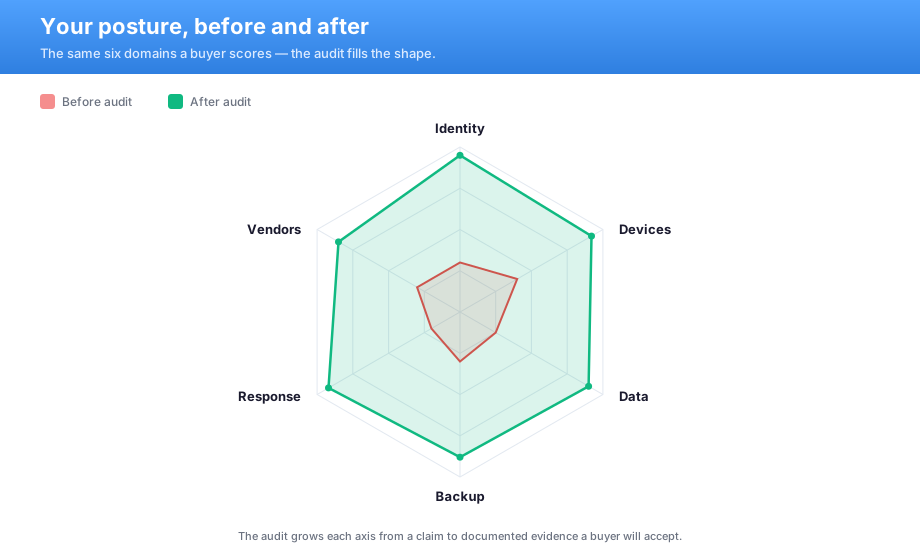
The value is not the red shape. By contrast, it is the documented green one. Specifically, the audit ranks the gaps by risk and fixes the dangerous ones first. Furthermore, it hands you a report a buyer can read without translation. Therefore you stop guessing on the form, and you answer with evidence.
| On the questionnaire | Without an audit | With the audit |
|---|---|---|
| MFA enforced? | Assumed, not proven | Documented, with screenshots |
| Endpoint protection? | Basic antivirus only | Defender, monitored and logged |
| Tested backups? | Runs, never tested | Isolated copy, restore tested |
| Data classification? | Ad hoc, undocumented | Purview labels and access trail |
| Response plan? | No written plan | A written, dated plan |
Notably, the finished report is also a sales asset. In practice, a clean scorecard gives your account lead something concrete to send. As a result, the same audit that clears review also shortens your next sales cycle.
Reading your scorecard before it goes out
A finished scorecard is more than a pass or a fail. Specifically, it is a document your account lead can attach with confidence. Therefore the half hour you spend reviewing it together pays back at the next deal.
Walk through the green rows first, since those are your selling points. Furthermore, mark any amber items with a date for when they close. As a result, you present an agency that is visibly improving, rather than one standing still. By contrast, an undocumented setup leaves the buyer guessing.
Buyers reward that kind of clarity. In practice, a documented, well-presented control set is what separates a stalled review from a fast yes. Notably, the same report reassures the next enterprise client who asks how you guard their data. Specifically, the scorecard turns a vague claim into a documented answer a buyer accepts. Furthermore, it gives your account lead something concrete to send the same day. As a result, the review stops being a bottleneck.
📉 A faster answer is a documented one
Clearing review is only half the prize. Specifically, the agencies that document the full control set answer the next form in hours, not weeks. Furthermore, the saved time compounds across every deal. As a result, the audit pays for itself well inside the year. Specifically, every review after the first reuses the same evidence pack. Furthermore, you answer in hours instead of days, while competitors scramble. As a result, a documented control set quietly becomes a sales advantage. In practice, the agencies that prepare once win faster for years.
Predictable effort, not a yearly scramble
A late questionnaire arrives as a scramble you cannot plan. However, a documented setup is the opposite. Specifically, you know the answers before the form arrives. Furthermore, the effort scales gently with your headcount, not with a crisis. Therefore the boring, predictable file is the one that protects both your deals and your time. Specifically, a yearly review keeps the evidence current as staff and tools change. Furthermore, nothing drifts silently between renewals. Therefore the next questionnaire is a quick refresh, not a fresh fire drill.
🗓️ A ninety-day path to an audit-ready file
You do not need to fix everything at once. Specifically, ninety days is enough to answer any form with strong evidence. Furthermore, the order matters more than the speed.
- Days 1–30: enforce multi-factor sign-in everywhere, and book the audit.
- Through days 31–60: turn on endpoint defence, enrol devices, and isolate backups.
- By day 90: test a restore, write the response plan, and capture every screenshot.
By the end of the quarter, the file looks different. Therefore your scorecard moves from red to green. As a result, you face the next buyer with evidence instead of crossed fingers. Specifically, you close the cheapest, highest-impact controls in the first weeks. Furthermore, the order matters more than the speed. As a result, you are materially safer well before the ninety days are up.
When you are already in good shape
Some agencies are further along than they think. However, a quick check still pays off. Specifically, even a strong setup drifts as staff and tools change. Furthermore, a yearly review keeps your evidence current for the next form. As a result, you never scramble to produce proof the week a deal is on the line. Specifically, even a strong setup drifts as people and tools change. Furthermore, a short annual check keeps your file aligned with what buyers ask. Therefore you never scramble to assemble proof under deadline.
📚 More for US service firms
🎯 Get a productized Microsoft 365 audit built for buyer reviews
Full environment audit for a US agency. Specifically, it covers multi-factor sign-in, endpoint defence, managed devices and tested backups. Furthermore, it covers data labels and a documented response plan, mapped to the questions buyers ask. You get a written report with prioritized fixes and the proof to attach, plus 14 days of email Q&A.
❓ Marketing agency security questionnaire: frequently asked questions
These are the questions US agency owners ask us most when a buyer review lands, gathered from real questionnaires.
Common marketing agency security questionnaire questions
Almost always a control you could not prove. Specifically, multi-factor sign-in that is on but undocumented is the top cause. Furthermore, untested backups and no written response plan are close behind. The fix is to enforce each control and capture the proof.
Yes, for nearly every enterprise buyer. They ask about it by name and want it enforced on email, file access and admin accounts. Furthermore, they want documentation, not a yes. Without it, most reviews stall and many deals quietly drift away.
Because owning a control is not the same as enforcing and proving it. Specifically, buyers want screenshots and a written policy showing the control runs everywhere. A feature you never switched on counts as nothing on the form.
A few more answers for owners
A productized audit is fast. We review your environment, score each control, and deliver a written report with the evidence attached, usually within days. You also get 14 days of email questions afterward.
Yes, the buyer questions are identical. The same controls and the same proof are expected whichever suite you run. Therefore the audit approach maps your gaps and the fixes either way.
Often, yes. Agencies that document the full control set answer the next form in hours, not weeks. Furthermore, a clean scorecard reassures the buyer. It is a predictable, repeatable asset, not a fresh scramble each time.