
Hotel guest data security is no longer an IT problem for the back office; it is a balance-sheet problem. Every reservation leaves a trail of passports, card numbers and loyalty profiles, and that trail rarely sits in one safe place. Instead it spreads across booking systems, staff inboxes, spreadsheets and drives, and each copy becomes one more way to lose it.
The good news for owners and general managers: you do not need a bigger IT department to fix this. You need to know where guest data lives, who can reach it, and whether you could prove it is protected. A focused audit answers exactly those questions.
🏨 Not sure where your guest data ends up?
Wintive helps US hotels and hospitality groups protect guest data without slowing the front desk. Specifically, the work finds every copy of sensitive data, tightens who can see it, and gives you proof for compliance. Furthermore, it runs on the Microsoft 365 you already pay for, at a predictable monthly cost.
📅 Book a Free 30-Min Call | 💬 Chat on WhatsApp | See Our Plans →
This guide walks through where the risk really hides, what a single breach actually costs a hotel in cash and reputation, and the practical, low-cost steps that close those gaps long before they ever turn into a headline or an insurance claim.
🏨 Hotel guest data security starts with one question
📌 TL;DR — hotel guest data security in 2026: guest data is copied across booking systems, email and drives, and any one copy can be stolen. A breach now costs hotels millions. Therefore the fastest fix is an audit that maps where the data sits, locks down access, and proves you are compliant.
Why hotel guest data security gets overlooked
The problem hides because nothing looks broken. Specifically, every copy of a guest record works perfectly day to day, so nobody questions it. As a result, the risk stays invisible until a stolen login turns those forgotten copies into a breach.
The uncomfortable question is simple: if a guest asked you today to show every place their passport scan and card details sit, could you? Most properties cannot. In practice, the same record gets re-typed into a reservation, emailed to a manager, exported to a spreadsheet and saved on a drive. Each of those copies then lives on long after the stay ends, quietly waiting.
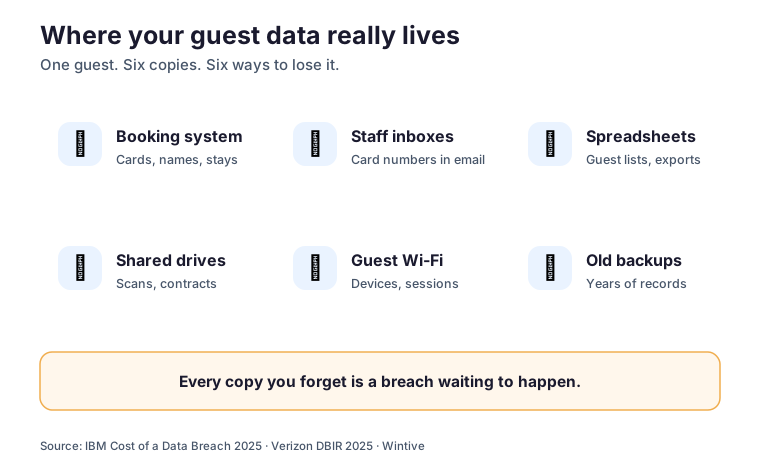
That scattering sits at the heart of the problem. In practice, you cannot protect what you cannot see, and you certainly cannot prove it is safe. Therefore the goal is not more software. It is fewer copies, tighter access and a clear record of where everything lives. In short, visibility is not a nice-to-have; it is the foundation every other control depends on, and it is the first thing a good audit hands back to you.
💸 What one breach really costs you
Owners often picture a breach as a technical headache. The reality is financial and very public. A single incident drains cash through fines, forensic investigations, guest notifications and identity-protection offers. Then bookings dip while your name sits in the news. As a result, the cost lands squarely on the business, not on the IT budget. And unlike a quiet software glitch, a breach follows you into every future booking and every press mention.
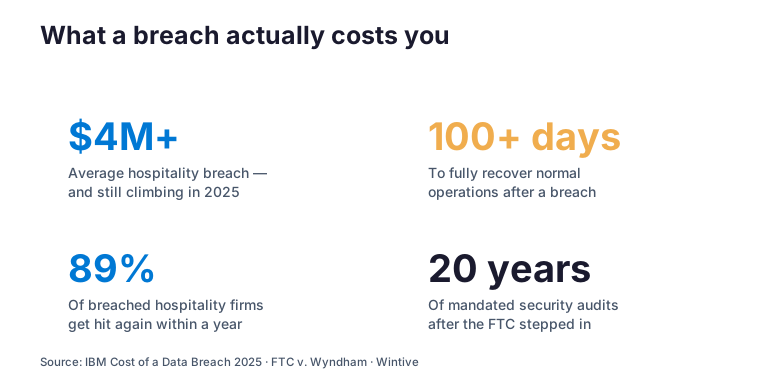
The numbers are sobering. Industry research now puts the average hospitality breach in the millions, and unlike most sectors that figure keeps rising. Most properties then take over a hundred days to recover, and the majority face a second breach within a year. That repeat rate alone tells you the first breach rarely fixes the gap that let it happen.
Why the bill keeps climbing
Three forces push the cost up every year. First, attackers now sell guest records and card numbers faster, so a single break-in spreads further. Second, regulators and card brands raise the penalties for weak protection. Third, guests punish a breached brand by booking elsewhere, and that lost revenue often dwarfs the fine itself. Together, these forces turn one quiet gap into a very loud bill.
| What it costs you | Why it hurts | How long it lasts |
|---|---|---|
| Fines and card penalties | Regulators and card brands charge for lost data | Months of payments |
| Forensics and clean-up | Outside experts must find and close the breach | Weeks of fees |
| Lost bookings | Guests avoid a name they read about in the news | A full season or more |
| Staff time | Your team stops serving guests to handle the fallout | Weeks of disruption |
Seen this way, prevention is not a cost. It is the cheapest line item on the page. Specifically, a focused review and a few targeted fixes cost a tiny fraction of one incident. Therefore the real choice is whether to spend a little now or a great deal later. Framed that way, the decision takes most owners about a minute to make.
🚪 How hotel guest data security fails in plain sight
Attackers rarely break down the door. Instead they walk in through everyday gaps your team never thinks about. Understanding these routes matters, because each one carries a simple, low-cost fix once you can see it.
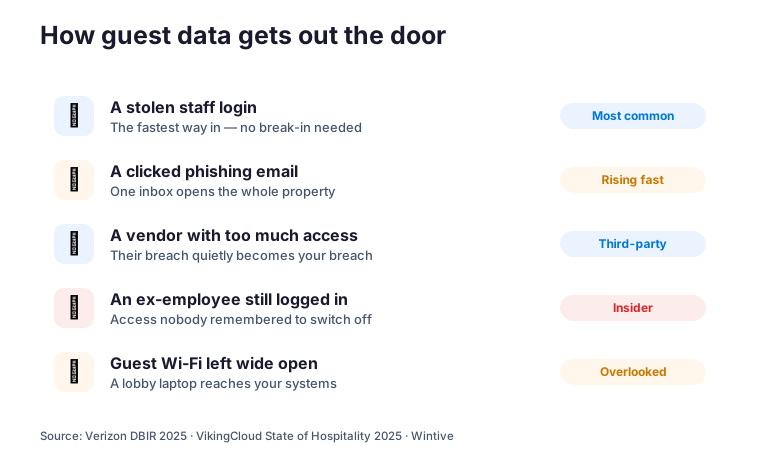
The stolen login nobody noticed
The most common way in is a working password. Specifically, a front-desk or finance login gets phished or reused, and the attacker simply signs in. No alarm sounds, because to your systems it looks like a normal member of staff. Therefore a stolen login can reach guest records for days before anyone notices anything is wrong. A second sign-in factor stops almost all of these intrusions, and it costs only a few dollars per user.
The vendor you forgot about
Hotels rely on a long list of outside partners, from booking channels to payment processors. Each one often holds a key to your data. As a result, their weak security quietly becomes your problem, and a breach at a single supplier can expose every guest you share. Notably, this third-party risk ranks among the fastest-growing causes of hospitality breaches. Reviewing which partners hold a key, then trimming that list, shrinks the exposure quickly.
The open Wi-Fi in your lobby
Guest Wi-Fi feels harmless, yet a flat, open network lets a stranger in the lobby reach the same systems your staff use. Specifically, when the guest network and the back-office network share one connection, a laptop by the bar can probe your reservation system. Therefore separating the two networks closes a door most owners never knew stood open. Better still, it is usually a one-time network change rather than an ongoing cost.

The pattern across all of these routes stays the same. In practice, the data sat within reach of too many people, in too many places, with too little oversight. Therefore closing the door depends far less on new tools and far more on control and visibility.
🧾 What you actually hold, and the rules that follow
Different guest data carries different obligations, and ignoring them grows expensive fast. Specifically, the moment you take a card or scan a passport, rules attach to that record. Knowing which rules apply is the first step toward staying on the right side of them.
Card payments and the price of PCI
Any property that takes card payments must meet the PCI DSS standard, and the latest version now expects continuous protection rather than a once-a-year check. Furthermore, card numbers sitting in an inbox or a spreadsheet almost always break those rules. As a result, getting PCI wrong invites fines, higher processing rates and, in severe cases, the loss of your ability to take cards at all. Simply keeping card data out of email and spreadsheets removes most of that exposure in a single move.
Passports, IDs and privacy law
Passport scans, addresses and guest profiles fall under privacy laws such as California’s CCPA and a growing list of state rules. Specifically, regulators expect you to know what you hold, protect it, and delete it once you no longer need it. The well-known FTC settlement with a major hotel group, which forced twenty years of security audits, shows how seriously courts now treat this.
Loyalty profiles and the long memory of marketing
Loyalty programmes quietly build the richest files you hold: stay history, preferences, spend and contact details. However, that depth makes them a prize for attackers and a liability under privacy law. Therefore the safest approach keeps only what you truly use, protects it tightly, and lets guests see and delete their own records on request. That restraint also makes a future audit far simpler, because less sensitive data sits around to account for.
🔍 What a hotel guest data security audit shows you
An audit is not a sales pitch or a pile of jargon. It is a clear, plain-English picture of where you stand. Specifically, it maps every place guest data lives, shows who can reach it today, and flags exactly where you fall short of the rules. Therefore you finally see the gaps you have carried, often for years.
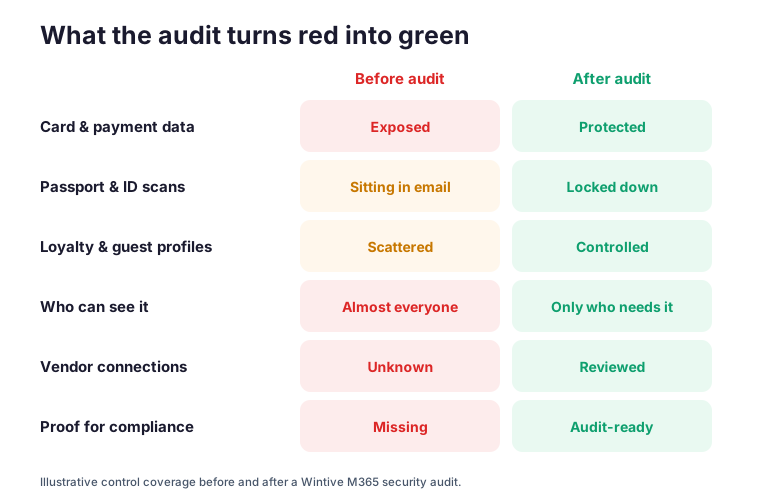
The value lives in the before-and-after. As a result, a list of vague worries becomes a short, ranked plan of fixes. Furthermore, each fix carries a clear business reason, so you spend on what matters and skip what does not. That clarity is worth far more than the price of the review.
Across the 60+ tenants we manage, the common mistake is almost always the same: guest data nobody owns, sitting in an inbox or an old spreadsheet that everyone can open. Specifically, it works fine day to day, so it silently fails to raise any concern, until a stolen login finds it. Notably, the same controls that fix this map straight to the PCI, SOC 2 and NIST language your insurer and card processor now expect. Therefore Wintive turns scattered, unowned data into a small set of protected, monitored records. Then a breach becomes a near miss, not a closure.
🛡 Closing the gaps without slowing the front desk
The biggest worry owners raise is speed: will tighter security make check-in slower or frustrate the team? Done well, the answer is no. Specifically, good protection runs quietly in the background and barely changes the daily routine. The work breaks down into three plain goals.
Lock down where it all sits
First, the scattered copies move into a small number of protected places, and sensitive fields like card numbers leave email entirely. As a result, you guard fewer copies and lose fewer ways in. Furthermore, the tools to do this already sit inside your Microsoft 365 Business Premium subscription, so this step rarely needs new spend.
Decide who can see what
Second, you trim access so each person reaches only what the job needs. Specifically, a housekeeper, a receptionist and an accountant should never share the same view of guest files. Therefore even a stolen login opens far less, and the damage from any single mistake stays small and contained. In practice, this one change blunts the damage of most phishing attacks on a property.
Keep proof that you are protected
Third, the system quietly records who touched what and when. As a result, when an insurer, a card processor or a regulator asks, you show your work in minutes instead of scrambling for weeks. That proof often decides whether a policy renews or a claim gets refused. In a tight insurance market, that paper trail is increasingly the price of getting cover at all.
🤝 Your vendors are part of your hotel guest data security
No hotel runs alone. Booking channels, payment processors and software partners all touch your guest data every day. However, every one of those connections also opens a door into your property. Specifically, when a supplier is breached, your guests are exposed even though you did nothing wrong. Therefore a serious approach has to include the partners you depend on.
| Vendor type | What they hold | The risk if breached |
|---|---|---|
| Booking channels | Names, dates, card details | Mass guest exposure at once |
| Payment processor | Cardholder data | Direct financial fraud |
| Property management software | Full guest profiles | Everything in a single place |
| Marketing and email tools | Contacts and preferences | Ready-made phishing lists |
You cannot audit every supplier yourself, but you can control what they reach and demand proof they take security seriously. As a result, a Wintive audit reviews these connections and flags any partner that holds more access than it needs.
That review also gives you sharper questions before you renew a contract. Specifically, you can ask a vendor how they store card data, who can see it, and how quickly they would tell you about a breach. Therefore your suppliers become a managed risk rather than a blind spot. Over time, that turns vendor security from a yearly worry into a simple, repeatable checklist.
👥 The staff side: turnover and forgotten access
Hospitality runs on people, and people come and go constantly. Seasonal hires, agency staff and quick departures are simply normal. However, when someone leaves, their login often lives on. Specifically, a forgotten account with no owner gives an attacker one of the easiest ways into your guest data, long after that person stopped working for you.
The fix is a clean, consistent routine: the moment a contract ends, the access ends too. Furthermore, the same discipline covers people who change roles, so a former night manager never keeps finance access for years. This mirrors the discipline behind how event companies guard guest data, and it matters just as much for hotels.

None of this demands a heavy process. In practice, the right setup removes access automatically and shows you every account that no longer belongs to anyone. Therefore turnover stops being a security hole and becomes a routine you barely notice. The payoff is steady protection that survives both a busy season and a high-turnover month.
💵 The math: prevention versus paying for a breach
Every spending decision comes down to a comparison, so it helps to set the two paths side by side. On one side sits a focused audit and a few fixes. On the other sits the full cost of a breach. Once you see them together, the choice makes itself.
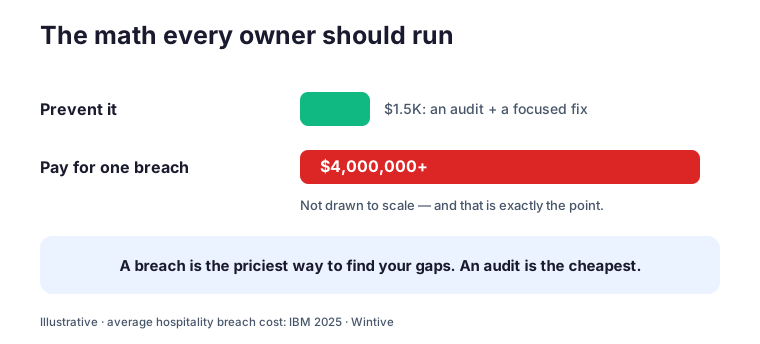
The gap is enormous, and that is the whole point. Specifically, a one-off audit costs a fraction of a single fine, let alone the lost bookings that follow. Because the fixes lean on licences you already pay for, the spend is mostly time and configuration, not new software.
What good looks like in 2026
Strong protection in 2026 is less about buying the most expensive product and more about using what you already own. Specifically, Microsoft 365 Business Premium bundles secure sign-in, device management and data protection into one per-user, per-month price, and even Business Standard covers the basics. Therefore most hotels never need to bolt on a separate sign-in service like Okta or Duo to stay genuinely secure.
This matters for the budget as much as the risk. As a result, leaning on one bundle lowers your total cost of ownership, or TCO, and shifts spending from a large CapEx outlay to a steady, predictable OpEx line. The same discipline that protects a US healthcare practice or a financial services firm protects a hotel just as well. Furthermore, the controls line up with standards from bodies like the PCI Security Standards Council, exactly the language insurers want to hear.
🗺 A 90-day hotel guest data security plan
You do not have to fix everything at once. In practice, a simple three-step plan across a single quarter takes a property from exposed to protected, without disrupting service. Each phase delivers something concrete you can show your team and your insurer.
| Phase | What you do | What you get |
|---|---|---|
| Days 1 to 30: Find | Map where guest data lives and who can reach it | A clear picture and a ranked list of gaps |
| Days 31 to 60: Fix | Move data into protected places and trim access | Fewer copies and a far smaller target |
| Days 61 to 90: Prove | Turn on monitoring and document the controls | Audit-ready proof for insurers and card brands |
By the end of the quarter you are not merely safer. As a result, you can prove it, which protects your insurance, your card processing and your reputation all at once. Furthermore, the routine then keeps running quietly, so you stay protected without constant effort.
That is the real prize: not a one-off scramble, but a calm, repeatable standard. Start with the question you could not answer at the top of this guide, and let the audit turn it into a short, fundable plan.
📚 More for US hospitality teams
🏨 Protect your guest data before a breach finds it
A full Microsoft 365 audit for a US hotel or hospitality group. Specifically, it maps where guest data lives, tightens who can reach it, secures card and ID records, and reviews your vendor connections. Furthermore, it is mapped to the way insurers, card brands and regulators ask. You get a written report with prioritized fixes and proof you are protected, plus 14 days of email Q&A.
❓ Hotel guest data security: frequently asked questions
These are the questions US hotel owners and general managers ask us most, drawn from real audits and insurance reviews.
Common hotel guest data security questions
Hotel guest data security means protecting the personal and payment details guests share, such as names, cards, passport scans and loyalty profiles, wherever they are stored, so the data cannot be stolen or misused.
Industry research puts the average hospitality breach in the millions, and that figure keeps rising. Most properties need over a hundred days to recover, and many face a second breach within a year.
Yes. Any hotel that takes card payments must meet PCI DSS, and the latest version expects continuous protection. Card numbers left in an inbox or spreadsheet almost always break those rules and invite fines.
A focused ninety-day plan is usually enough: map where data lives, lock it down and trim access, then turn on monitoring and document the controls, leaving you audit-ready without disrupting service.
No. Done well, protection runs quietly in the background and barely changes the daily routine. It mainly shrinks what a stolen login can reach, so guests and staff notice no difference.