
A SOC 2 readiness assessment is the practice run that tells a small business where it really stands before the audit that decides a deal. More and more US enterprise clients now refuse to sign until you can prove your data is secure. Therefore, walking into the real audit blind is the most expensive mistake you can make.
However, most guides on this come from software vendors who want to sell you a platform. This SOC 2 readiness assessment guide is different. Specifically, it shows what the assessment checks in plain English, how much of it your Microsoft 365 already covers, and what it costs in time and money. It is written for a busy owner, not a security engineer, so there is no jargon to wade through. As a result, you know exactly what to fix before the auditor ever arrives.
Want to know exactly where your business stands before a SOC 2 audit?
Wintive runs a SOC 2 readiness assessment on the Microsoft 365 you already own. We map your current controls to the SOC 2 criteria, find the gaps, and rank the fixes by real risk. The price is a flat monthly fee per user, with no long contract and no setup cost.
📅 Book a Free 30-Min Call | 💬 Chat on WhatsApp | See Our Plans →
🧭 SOC 2 readiness assessment: the short answer
A SOC 2 readiness assessment is a dry run of the real audit. An expert reviews your security controls, compares them to the SOC 2 criteria, and hands you a list of the gaps to fix before the official audit begins. It is not graded, so there is no pass or fail, only a clear map of the work ahead. Most of the controls it checks already live in the Microsoft 365 you own, so the gaps are usually smaller and cheaper to close than vendors suggest. In short, it turns a scary audit into a costed plan.
Crucially, a readiness assessment is not the audit itself. Instead, it is the rehearsal you run first, so the graded audit holds no surprises. Therefore, its whole job is to find problems while they are still cheap and quiet to fix.
Notably, the assessment is also where you decide how big the project really is. It sets your scope, your budget, and your timeline in one short exercise. Therefore, treat it as the planning stage of the whole SOC 2 effort. As a result, every later step becomes faster and more predictable.
In practice, that is why skipping it backfires. Firms that jump straight to the audit pay the auditor to find gaps they could have fixed for far less. As a result, a readiness assessment almost always saves more than it costs. In short, think of it as a map before a long journey, where a small planned cost now buys a calm, predictable path to the report instead of a gamble.
🔎 What a SOC 2 readiness assessment actually is
First, the plain-English version. A SOC 2 readiness assessment is a structured review of your security controls against the SOC 2 standard. An expert checks what you do today, compares it to what an auditor will expect, and writes up the gaps. In fact, Microsoft documents how its own cloud meets the standard in its SOC 2 compliance overview.
Importantly, the word to hold onto is rehearsal. The readiness assessment is your dress rehearsal, while the audit is opening night. Therefore, it carries no grade and no pass or fail. As a result, you can be brutally honest about your weak spots without it costing you a thing.
Notably, this is also where most of the value hides. The output is not a certificate but a punch list, a ranked set of fixes you can actually work through. Therefore, a good readiness assessment leaves you with a plan, a budget, and a date, not just a worry.
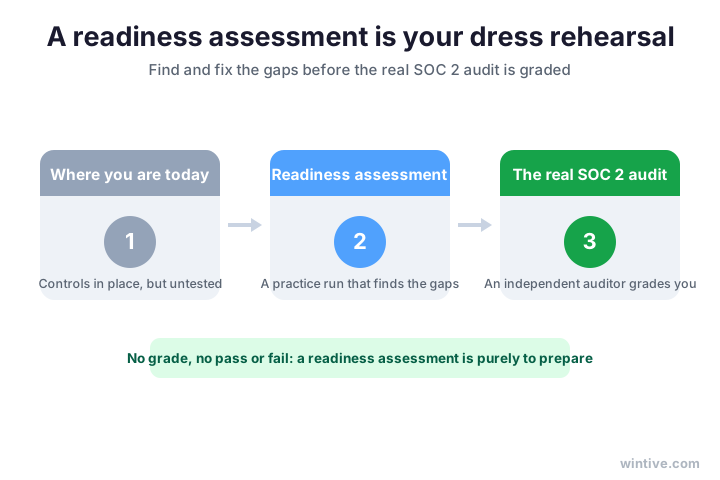
Therefore, think of it as buying certainty. You trade a small, planned cost now for no nasty surprises later. As a result, the audit becomes a formality rather than a gamble.
In short, the assessment is the cheapest moment to be wrong. Every gap you uncover here is one you fix on your own terms, not under audit pressure. As a result, being honest now is exactly what makes the audit later feel easy.
🤝 Why a readiness assessment is worth it
Above all, remember why you are doing this. A SOC 2 report is a sales asset before it is a security project. Specifically, a clean report removes the biggest objection a cautious enterprise buyer has about a smaller vendor. Therefore, the readiness assessment is the first step toward closing bigger deals.
In practice, the assessment protects your timeline as much as your budget. When a prospect asks for SOC 2, you already know your gaps and your date. Therefore, you answer with confidence instead of panic. As a result, you keep the deal moving while a slower competitor scrambles.
Notably, it also stops you from overspending. Without a readiness assessment, owners often buy tools they do not need and skip fixes they do. Therefore, the assessment is the cheapest insurance against wasting money on the wrong things. As a result, every later dollar goes where it actually matters.

In short, the readiness assessment is where security stops being a cost and starts being a sales tool. It hands you proof, a plan, and a price, all before you commit a cent to the audit. As a result, the smartest owners run it early and treat it as an investment in bigger deals.
📂 What to prepare before your readiness assessment
Before the assessment starts, a little prep makes it faster and cheaper. The reviewer mostly needs to see how you already run the business, so gather the basics first. Therefore, a short hour of preparation can save days of back-and-forth later.
Importantly, none of this needs to be polished. A readiness assessment is the place to show rough reality, not a tidy story. Therefore, hand over what you actually have, gaps included. As a result, the reviewer can give you an honest picture instead of a flattering one.
Specifically, it helps to have a simple list of who works with sensitive data, a note of the main tools you use, any security policies you have written, and a rough idea of who your key vendors are. So even a one-page summary of each speeds things up. As a result, the assessment can focus on finding gaps rather than chasing basic facts.
| Control area | Where it usually lives | Typical readiness |
|---|---|---|
| Access and sign-in | Microsoft Entra ID | Mostly ready |
| Encryption and data | Microsoft Purview | Mostly ready |
| Vendor and incident plans | Your own policies | Often a gap |
Therefore, the goal of prep is not perfection but a clear starting point. The more honestly you describe how things work today, the more useful the gap list will be. As a result, an hour spent here pays for itself in a sharper, cheaper assessment.
Notably, most of this evidence already exists inside Microsoft 365. Your sign-in settings, sharing rules, and activity records are all there to be read. As a result, a good reviewer can pull much of the picture straight from the tenant you already run.
📋 What a SOC 2 readiness assessment finds
Here is the heart of it. A readiness assessment sorts every control area into one of three honest buckets: ready, partly there, or a gap to close. Therefore, you finish with a clear picture of exactly how far you have to go.
Importantly, the three buckets keep the project calm. You are not failing anything; you are simply mapping the work. Therefore, even a long list of gaps feels manageable once it is sorted by what is done and what is not. As a result, the assessment turns dread into a to-do list.
Specifically, it looks at who can access what, a two-step sign-in, encryption, a record of activity, threat monitoring, vendor checks, an incident plan, and tested backups. The chart shows how each area tends to land for a typical small business.
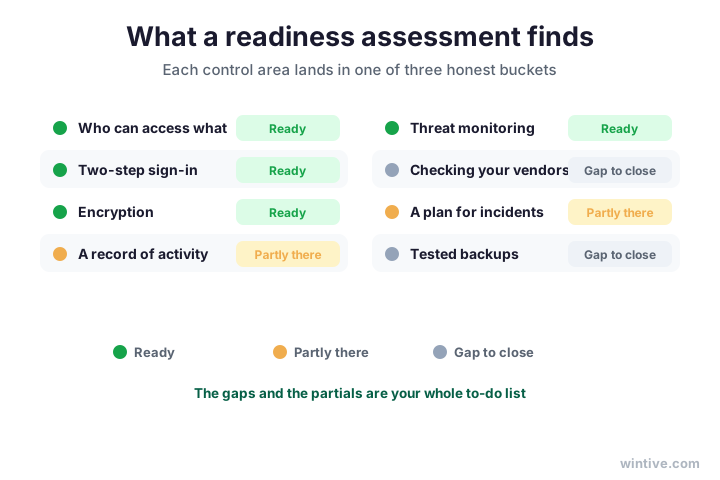
Notably, the pattern is reassuring. The technical controls are often ready, while the gaps are policies and evidence you simply have not written down yet. As a result, the work is more about documentation than about buying new tools.
🗺️ The SOC 2 readiness assessment process
With the buckets clear, picture the path. A SOC 2 readiness assessment follows the same six steps for almost every small business. Therefore, knowing the order keeps the exercise short and focused.
Importantly, the order is what keeps it cheap. You scope tightly first, so you never assess controls that do not apply. Therefore, the assessment stays small and the report stays sharp. As a result, you avoid paying to review work that was never in scope.
Specifically, you scope the report, map your current controls, find the gaps, rank them by risk, fix and document, then get audit-ready. The chart lays out the process from a blank page to a clean file.
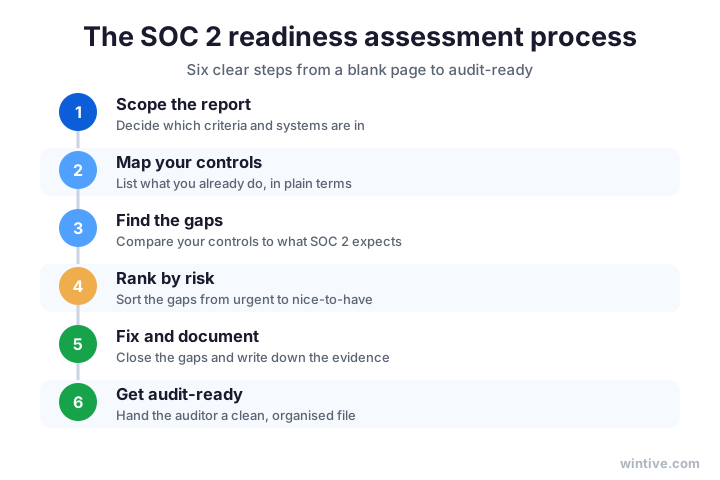
Notably, one of those steps quietly saves more money than the rest, and it is worth flagging before you spend a thing.
Wintive insight. Across the SMB tenants we assess, the costliest mistake is buying a compliance-automation platform before anyone has measured what Microsoft 365 already covers. Teams pay thousands a year for software that duplicates Entra ID, Purview, and Defender, then still pay an auditor. A focused readiness assessment of the tenant usually closes the real gaps for a fraction of that, and it is exactly what our Master Audit delivers.
Therefore, the ranking step matters most. Fixing the riskiest gaps first means you are audit-ready in the ways that count, even if a few minor items linger. As a result, you reach a usable report without chasing perfection.
🟢 How much your Microsoft 365 already covers
This is the part the software vendors skip. If you run Microsoft 365, you already own the tools behind most of the controls a readiness assessment checks. Therefore, you are not starting from zero, and you may not need an expensive new platform at all.
Notably, this is the message vendors would rather you missed. They sell a layer that sits on top of tools you already pay for. Therefore, the honest first move is to measure your own coverage. As a result, you often find the gap is small and the fix is cheap.
Specifically, Microsoft 365 already controls who can sign in, adds a two-step check at login, encrypts your data, keeps a record of activity, and watches for threats. So a large share of the assessment is already satisfied, or one setting away. The chart shows roughly how much you tend to cover already.
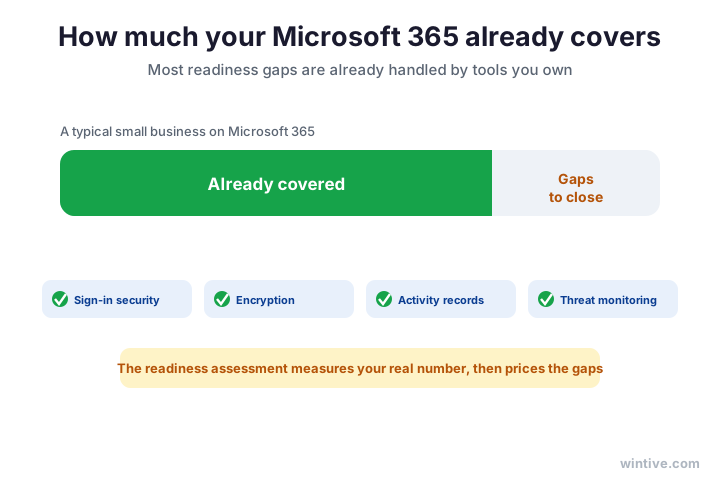
Therefore, the smart first step is to measure what your tenant already satisfies. As a result, you spend only on the genuine gaps, not on tools that duplicate Microsoft 365.
In short, a coverage check is the single most useful page a readiness assessment produces. It tells you what to buy and what to skip. As a result, you avoid paying twice for protection you already own.
Therefore, the honest headline is that you have probably done more than you think. Years of normal Microsoft 365 admin have quietly built most of what SOC 2 asks for. As a result, the assessment often feels less like a mountain and more like a final tidy-up.
💷 What a SOC 2 readiness assessment costs and how long
Of course, owners want the numbers. Costs vary widely, so treat these as rough US ranges for a small business. A readiness assessment itself is far cheaper than the audit, and it usually pays for itself by shrinking the audit that follows.
Notably, the biggest hidden cost is your own staff time. Pulling people off their work to chase evidence adds up fast. Therefore, a focused outside assessment often costs less than doing it all in-house. As a result, the headline price rarely tells the whole story.
However, the assessment is only the start of the bill. Closing the gaps and tooling can cost more than the review itself. Therefore, the cheapest path is to fix gaps efficiently before the auditor starts the clock. The chart sets out the rough picture.
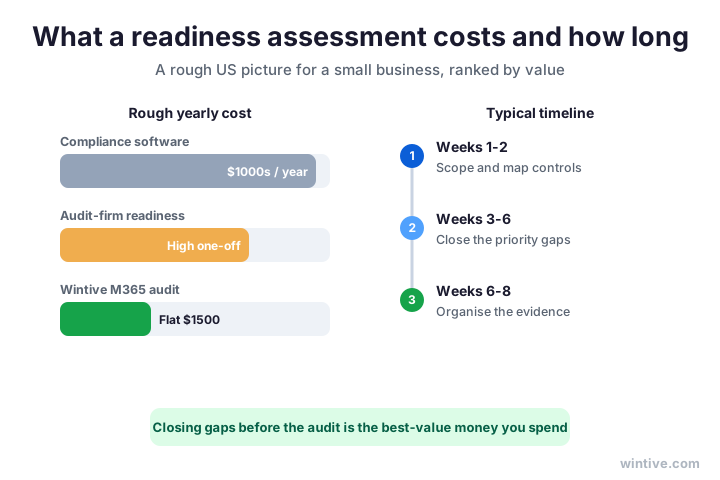
However, that is exactly why the assessment pays off. Every gap you find and close before the audit is a gap the auditor does not bill you to discover. Therefore, readiness work is the best-value money in the whole project.
⚖️ Two ways to run your readiness assessment
So, how should a small business actually run one? Broadly, there are two routes. You either buy compliance-automation software and do it yourself, or you bring in a hands-on assessment of your Microsoft 365.
Importantly, for most small businesses the hands-on route wins on both cost and speed. You skip the yearly software bill and the long setup. Therefore, you reach a clear, costed plan in weeks. As a result, your first SOC 2 report arrives sooner and cheaper.
Specifically, the software route suits a larger, engineering-heavy company that wants continuous monitoring. However, for a typical SMB, it means paying thousands a year and still doing the work yourself. The chart contrasts the two paths.
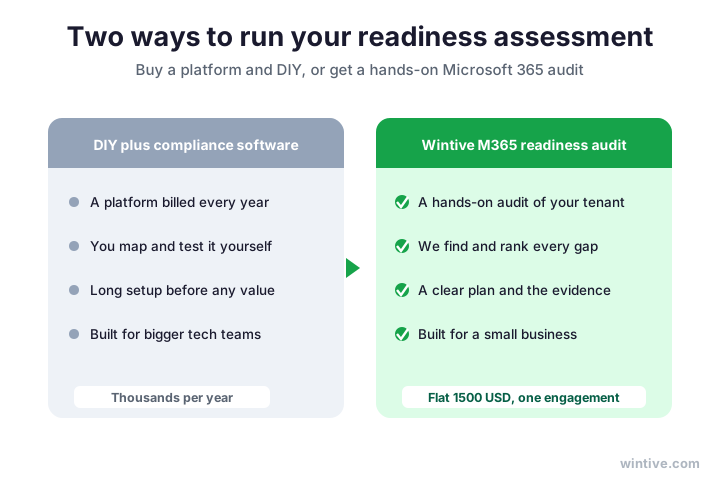
Therefore, match the route to your size and your buyers. A lean services firm rarely needs a heavyweight platform. As a result, the simpler path often gets you to a signed contract first.
In short, there is no prize for choosing the harder route. Pick the path that gets you a trustworthy report fastest, then get back to selling. As a result, most small businesses are better served by a focused audit than by yet another yearly subscription.
🔁 Staying ready after the first report
Meanwhile, a readiness assessment is not a one-time event. A SOC 2 Type 2 report proves your controls worked over months, so the controls have to keep working, not just pass once. Therefore, staying ready matters as much as getting ready.
Importantly, continuous readiness is far easier than the first push. Once the gaps are closed and the evidence is flowing, you are mostly keeping habits alive. Therefore, a short check each quarter usually keeps you audit-ready.
Specifically, the trick is to bake the controls into how the business runs day to day, not bolt them on before each audit. So sign-in rules, access reviews, and activity records keep producing evidence on their own. As a result, you are always close to ready, instead of scrambling every year.
| Phase | Effort | How often |
|---|---|---|
| Your first report | Higher: close gaps and document | A one-off setup |
| Staying ready | Lower: keep good habits alive | A quick quarterly check |
| Each new report | Confirm the controls held | Once a year |
Therefore, treat the first readiness assessment as setting up a system, not passing a test. As a result, the firms that win are the ones that make readiness part of normal work.
Notably, this is where running on Microsoft 365 pays off again. The same tools that closed your gaps keep watching and recording without extra effort. As a result, staying ready becomes a quiet background task rather than an annual fire drill.
Therefore, the second readiness assessment is mostly a confirmation, not a rebuild. You are checking that good habits held, not starting over. As a result, each year of SOC 2 gets lighter, while the trust it buys with clients keeps compounding.
👤 Who needs a SOC 2 readiness assessment, and when
Of course, not every small business needs one yet. So decide by your buyers, not by fear. Specifically, if you sell software or services to mid-market or enterprise clients, expect SOC 2 to come up in their security review.
Importantly, the trigger is almost always a buyer, not a regulator. A single enterprise prospect can make a readiness assessment worth it overnight. Therefore, treat the first request as a green light, not a burden. As a result, you turn a compliance demand into a reason to win bigger clients.
However, if you only serve very small local customers, the need may not be there yet. Therefore, watch your sales calls. The moment a prospect sends a security questionnaire or asks for a SOC 2 report, a readiness assessment gives you a head start.

Therefore, the smartest owners run the assessment the moment SOC 2 first appears in a sales call. As a result, they control the timeline instead of a prospect controlling it.
In short, the right time is the moment SOC 2 stops being hypothetical. One serious buyer asking is enough to start. As a result, an early readiness assessment means you answer that buyer with a date rather than a delay.
✅ Your SOC 2 readiness assessment recap
Condensed, here is what a SOC 2 readiness assessment gives you, so keep this list handy for the next time a buyer brings up SOC 2 in a sales call.
- A readiness assessment is a rehearsal, not a graded audit.
- It sorts every control into ready, partly there, or a gap.
- Most technical controls already live in your Microsoft 365.
- The gaps are usually policies and evidence, not new tools.
- It sets your scope, your budget, and your timeline up front.
- Closing gaps before the audit lowers every later cost.
- Run it the moment a buyer first asks for SOC 2.
Ultimately, at Wintive we run a SOC 2 readiness assessment on the Microsoft 365 you already own, as part of our managed security services. Moreover, we map your controls, rank the gaps, and hand you the evidence an auditor wants. To get started, contact us for a free consultation. It is quick, and we do the rest.
📚 More for compliance-minded SMBs
Therefore, these published Wintive guides go deeper on the topics a SOC 2 readiness assessment raises next. So bookmark the ones that fit your business.
🔒 Get a real SOC 2 readiness assessment of your Microsoft 365
The M365 Master Audit is a full Microsoft 365 security audit for a US small business. Specifically it reviews your identity, email, device, and data controls, maps them to the SOC 2 criteria, finds every gap, and ranks the fixes by real risk. As a result you get a written report, a clear action plan, and the evidence to show auditors and clients.
❓ Frequently Asked Questions
It is a structured rehearsal of the real SOC 2 audit. An expert reviews your security controls, compares them to the SOC 2 criteria, and hands you a ranked list of the gaps to close before the official audit. It carries no grade and no pass or fail.
A readiness assessment is the practice run; the audit is the graded, official event. It finds and prices your gaps so the audit holds no surprises. Only the audit itself produces the report your clients actually want to see.
Most of the technical controls. Microsoft 365 already controls who can sign in, adds a two-step login check, encrypts your data, keeps an activity record, and watches for threats. The remaining gaps are usually policies and evidence rather than new tools.
For a small business, the assessment itself usually takes two to four weeks. Closing the gaps it finds can take another four to eight weeks, depending on how much paperwork and configuration is missing.
It varies, but the assessment is far cheaper than the audit and often a flat fee. It pays for itself by shrinking the audit that follows, since every gap you fix first is one the auditor does not bill you to find.
Often not. Compliance-automation platforms suit larger, engineering-heavy firms. A typical SMB can run a readiness assessment on what Microsoft 365 already covers and close the real gaps, which is what our Master Audit does.
🧭 Your next step
Want to know exactly where your business stands? First, book a short call. Then we run a SOC 2 readiness assessment on your Microsoft 365, map it to the criteria, and show you the gaps and the budget. There is no obligation, and the first conversation costs you nothing. To start, contact Wintive. It is quick, and we do the rest.