

A SOC 2 compliance checklist is the fastest way for a small business to see where it stands before a costly audit. More and more US enterprise clients now refuse to sign until you can prove your data is secure. Therefore, SOC 2 has become the price of doing business, not a nice-to-have.
However, most checklists online come from software vendors trying to sell you a platform. This SOC 2 compliance checklist is different. Specifically, it shows what each control means in plain English, how much of it your Microsoft 365 already covers, and exactly where the real gaps are. As a result, you walk in knowing what the audit will cost you in time and money.
Not sure your business is actually SOC 2 ready?
Wintive gets US small businesses SOC 2 ready on the Microsoft 365 they already own. We map your current controls to the SOC 2 criteria, find the gaps, and document the evidence an auditor will ask to see. The price is a flat monthly fee per user, with no long contract and no setup cost.
📅 Book a Free 30-Min Call | 💬 Chat on WhatsApp | See Our Plans →
🧭 SOC 2 compliance checklist: the short answer
A SOC 2 compliance checklist covers the controls an auditor tests across access, encryption, logging, monitoring, vendors, and incident response. SOC 2 is built on five Trust Services Criteria, and only Security is required. Most of those controls already live in the Microsoft 365 you own, from sign-in security to encryption and threat monitoring. So the real work is closing the remaining gaps and documenting the evidence. In short, you are closer to SOC 2 than the software vendors want you to believe.
Crucially, SOC 2 is not a certification you buy. Instead, an independent auditor reviews your controls and writes a report. Therefore, your job is to make sure those controls exist, work, and are documented before the auditor arrives.
Notably, the report is not the goal in itself. The goal is the trust it unlocks, so a prospect signs and a deal closes. Therefore, treat SOC 2 as a sales tool, not just a security chore. As a result, the effort pays for itself the first time it wins you a contract.
In practice, that is where a checklist earns its keep. It turns a vague obligation into a concrete list you can work through. As a result, you stop guessing and start fixing the things that actually matter for the report.
🔎 What SOC 2 actually is, in plain English
First, the basics, without the jargon. SOC 2 is a security audit standard from the AICPA. It checks whether a company protects customer data the way it claims to. In fact, Microsoft documents how its own cloud meets it in its SOC 2 compliance overview. Therefore, clients use a SOC 2 report as proof that you can be trusted with their information.
Importantly, this matters for revenue, not just security. A growing number of mid-market and enterprise buyers now demand a SOC 2 report before they sign. So for a small B2B software or services firm, SOC 2 is often the difference between winning a deal and losing it.
Notably, SOC 2 is also flexible. You scope it to your business, and you choose which criteria apply beyond the mandatory Security one. As a result, a focused small business can keep the scope tight and the cost sensible.

🤝 How SOC 2 wins you bigger deals
Above all, remember why you are doing this. SOC 2 is a sales asset before it is a security project. Specifically, a clean report removes the biggest objection a cautious enterprise buyer has about a smaller vendor. Therefore, it shortens your sales cycle and lifts your win rate.
In practice, the report does the convincing for you. Instead of arguing that your security is fine, you simply hand over independent proof. As a result, the conversation moves from doubt to trust. Therefore, many firms find their first SOC 2 report pays for itself with a single contract.
Notably, it also widens the market you can sell into. Larger clients that were off-limits suddenly become reachable. Therefore, SOC 2 is less a cost and more an investment in the size of deal you can close. As a result, the smartest owners frame it exactly that way to their own teams.
🛡️ The criteria behind your SOC 2 compliance checklist
Next, understand the five criteria that SOC 2 is built on. Only the first, Security, is required for every report. The other four are optional, and you add them when they fit your business.
Importantly, you do not have to chase all five at once. Most clients only care that you cover Security well. Therefore, a small business can earn a useful report with a tight, single-criteria scope. As a result, you reach proof faster and spend far less.
Specifically, Security covers protection against unauthorized access. Availability covers uptime. Processing Integrity covers accurate data handling. Confidentiality covers restricting sensitive data. Privacy covers personal information. Therefore, most small firms start with Security alone and add others only when a client asks. The chart lays them out.
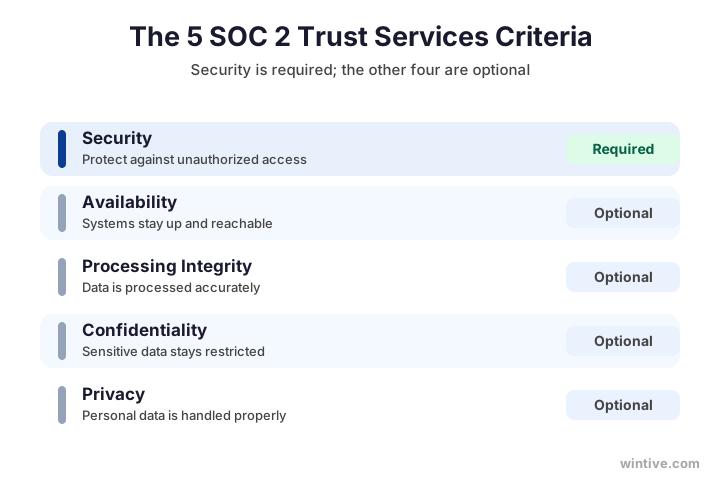
Therefore, scope is your biggest lever on cost. A tight scope keeps the audit short and the bill low. As a result, the criteria you leave out matter as much as the ones you keep.
🔢 SOC 2 Type 1 versus Type 2
Now, a choice that confuses many owners. SOC 2 comes in two flavours, Type 1 and Type 2. They sound similar, yet they prove very different things.
Notably, the choice is about timing, not quality. A Type 1 says your controls look right today, which reassures an early buyer. A Type 2 says they have held up for months, which a cautious enterprise wants to see. Therefore, plan to grow from one to the other.
Specifically, a Type 1 report checks whether your controls are designed correctly at a single point in time. A Type 2 report checks whether those controls actually worked over a window of three to twelve months. Therefore, Type 1 is the faster, cheaper first step, while Type 2 is what serious clients eventually want. The chart compares them.
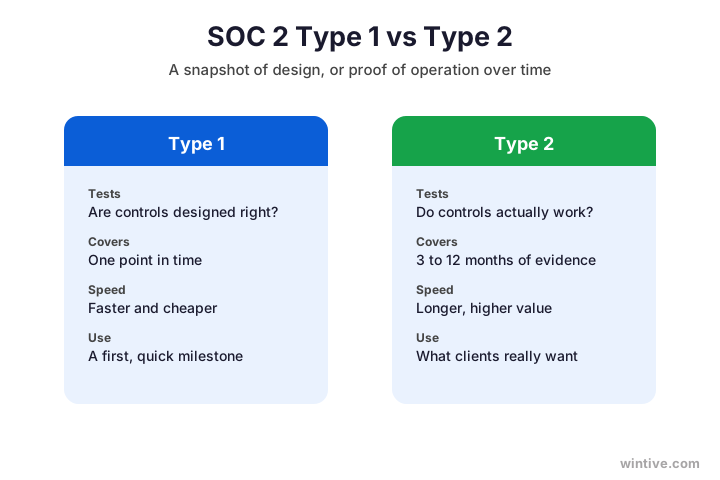
As a result, many small businesses earn a Type 1 first to win early deals, then move to Type 2 once the controls have run for a while. So you show progress without waiting a year to close your first contract.
Therefore, ask your buyer which report they actually need. Some accept a Type 1 to get started, while others insist on a Type 2. As a result, you avoid over-building for a client who would have signed sooner.
In short, do not let the two names slow you down. Pick the report your buyer actually wants, then move. As a result, you turn a confusing label into a quick, confident decision.
✅ The SOC 2 compliance checklist itself
Here is the heart of it. A practical SOC 2 compliance checklist groups the controls an auditor will test into clear areas. Therefore, you can work through them one by one and track your readiness.
Importantly, a checklist also protects you during the sales process. When a prospect sends a long security questionnaire, you answer straight from the same list. Therefore, you respond in hours, not weeks. As a result, you keep the deal moving while a slower competitor stalls.
Specifically, the checklist covers who can access what, a two-step sign-in, encryption, a record of activity, threat monitoring, vendor checks, a plan for security incidents, approving changes, tested backups, and staff training. The chart shows the full set at a glance.
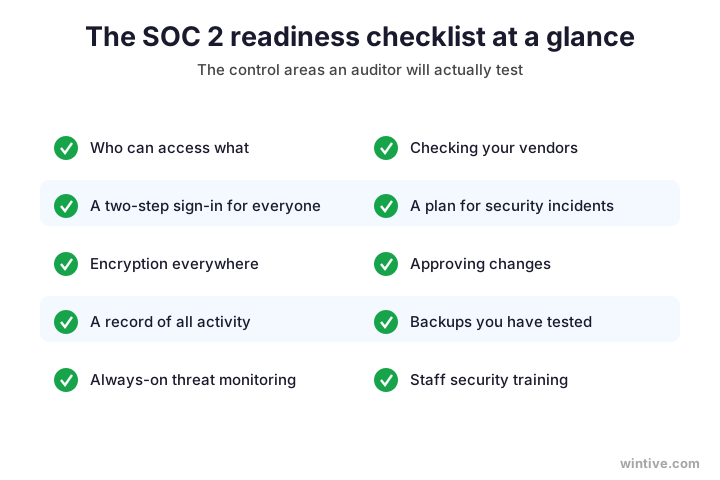
Notably, none of these areas is exotic. Each one is a normal part of running a secure business on Microsoft 365. As a result, the checklist feels far less daunting once you map it to tools you already pay for.
Therefore, print the list and tick it off honestly. An auditor will check the same items, so flattering yourself helps no one. As a result, an honest first pass shows you exactly how far you have to go.
🟢 Your SOC 2 compliance checklist mapped to Microsoft 365
This is the part the software vendors skip. If you run Microsoft 365, you already own the tools behind most SOC 2 security controls. Therefore, you are not starting from zero, and you may not need an expensive new platform at all.
Notably, this is the message the software vendors would rather you missed. They sell a platform that sits on top of tools you already pay for. Therefore, the honest first step is to measure your own coverage. As a result, you often find the gap is small and the fix is cheap.
Specifically, Microsoft 365 already controls who can sign in, adds a two-step check at login, encrypts your data, keeps a record of activity, and watches for threats. So a large share of the SOC 2 Security criteria is already on, or one setting away. The chart maps the controls to what you already own.
🟢 Measure your SOC 2 compliance checklist coverage
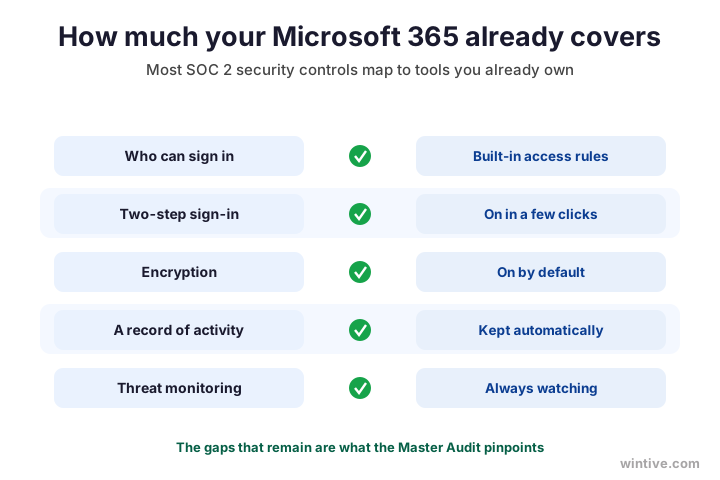
Therefore, the smart first move is to measure what your tenant already satisfies. As a result, you spend money only on the genuine gaps, not on tools that duplicate Microsoft 365.
Therefore, a quick coverage check is the best money you can spend first. It tells you what to buy and what to skip. As a result, you avoid paying twice for protection you already own.
In short, a coverage map is the single most useful page in this whole guide. It shows, in plain terms, what you already have and what you still need. As a result, you spend on the real gaps, not on overlap with what you own.
🗺️ Your SOC 2 readiness journey
With the controls clear, picture the path. Getting SOC 2 ready follows the same steps for almost every small business. Therefore, knowing the order keeps the project calm and predictable.
Importantly, the order also saves you money. Fixing the gaps before the watching period starts keeps the auditor’s clock short. Therefore, the cheapest projects are the ones that prepare well. As a result, rushing into the audit unprepared is the most expensive mistake of all.
Specifically, you scope the report, run a gap assessment, remediate the gaps, run an observation window for Type 2, then complete the audit and receive the report. The chart maps that journey end to end.
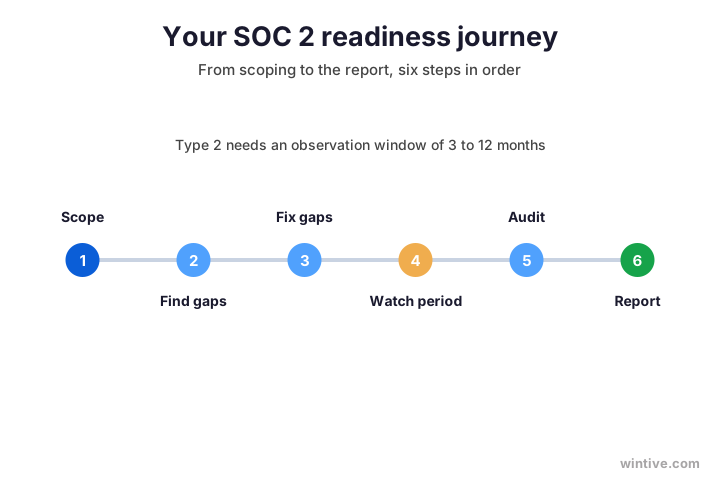
As a result, the longest part is usually the observation window, not the work itself. So starting early is the single best thing a small business can do for its SOC 2 timeline.
Therefore, the calendar, not the workload, usually sets your timeline. A few months of watching is unavoidable for a Type 2. As a result, the sooner you scope, the sooner you can sign your first SOC 2 client.
In short, the single biggest lever you control is when you start. Begin early and the watching period simply runs in the background. As a result, your first report lands months sooner than if you wait.
💷 What SOC 2 costs and how long it takes
Of course, owners want the numbers. Costs vary widely, so treat these as rough US ranges for a small business. The audit fee alone usually runs from a few thousand to over twenty thousand dollars, depending on scope and type.
Notably, the biggest hidden cost is staff time. Pulling your own people off their work to chase evidence adds up fast. Therefore, a focused outside audit often costs less than doing it all yourself. As a result, the headline audit fee rarely tells the whole story.
However, the audit is only part of the bill. Readiness work, tooling, and staff time often cost more than the audit itself. Therefore, the cheapest path is to close gaps efficiently before the auditor starts the clock. The table sets out the rough picture.
💷 What drives your SOC 2 cost and timeline
| Stage | Rough US cost | Typical timeline |
|---|---|---|
| Readiness and gap fixes | A few thousand and up | 4 to 12 weeks |
| Type 1 audit | Lower end of the range | A few weeks |
| Type 2 audit | Higher, plus the window | 3 to 12 month window |
However, that is exactly why preparation pays off. Every gap you close yourself before the audit is a gap the auditor does not bill you to find. Therefore, readiness work is the best-value money in the whole project.
Wintive insight. Across the SMB tenants we audit, the costliest SOC 2 mistake is buying a compliance-automation platform before anyone has checked what Microsoft 365 already covers. Teams pay thousands a year for software that duplicates Entra ID, Purview, and Defender, then still pay an auditor. A focused readiness audit of the tenant usually closes the real gaps for a fraction of that, and it is exactly what our Master Audit delivers.
⚖️ DIY plus software, or a readiness audit
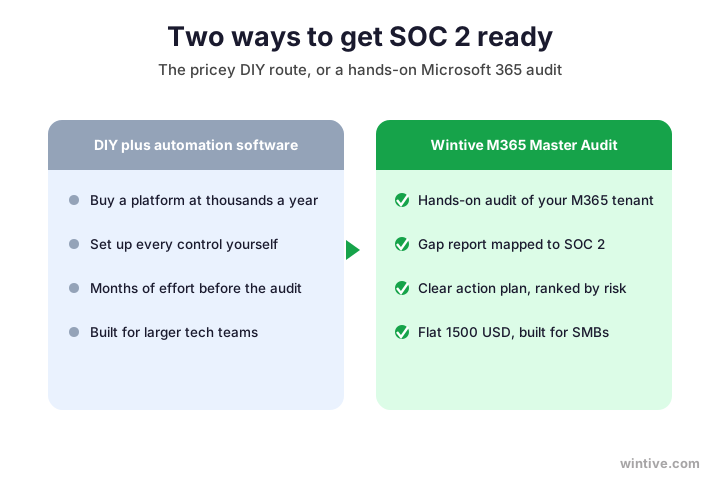
So, how should a small business actually get ready? Broadly, there are two routes. You either buy compliance-automation software and do it yourself, or you bring in a hands-on readiness audit of your Microsoft 365.
Importantly, for most small businesses the audit route wins on both cost and speed. You skip the yearly software bill and the long setup. Therefore, you reach a clear, costed plan in weeks. As a result, your first SOC 2 report arrives sooner and cheaper.
Specifically, the software route suits a larger, engineering-heavy company that wants continuous monitoring. However, for a typical SMB, it means paying thousands a year and still doing the configuration work. The chart contrasts the two paths.
Therefore, match the route to your size and your buyers. A lean services firm rarely needs a heavyweight platform. As a result, the simpler path often gets you to a signed contract first.
🪤 SOC 2 compliance checklist mistakes to avoid
Meanwhile, a few mistakes derail SMBs again and again. First, many treat SOC 2 as a one-time project. However, a Type 2 report proves controls over time, so the work has to stick, not just pass once.
Furthermore, a third trap is leaving it until a deal is on the line. Then you scramble, overpay, and still miss the deadline. Therefore, start the moment SOC 2 first comes up in a sales call. As a result, you control the timeline instead of a prospect controlling it.
Furthermore, some scope the report too wide, adding criteria no client asked for. That inflates the cost and the timeline for no benefit. Therefore, keep the scope tight to Security plus only what your buyers require. As a result, you reach a usable report faster and cheaper.

Therefore, treat SOC 2 as part of how you run the business, not a one-off. The controls only stay valid if they keep working. As a result, the firms that win are the ones that bake it into daily habits.
👤 Who needs SOC 2, and when
Of course, not every small business needs SOC 2 yet. So decide by your buyers, not by fear. Specifically, if you sell software or services to mid-market or enterprise clients, expect SOC 2 to come up in their security review.
Importantly, the trigger is almost always a buyer, not a regulator, unlike HIPAA compliance. A single enterprise prospect can make SOC 2 worth it overnight. Therefore, treat the first request as a green light, not a burden. As a result, you turn a compliance demand into a reason to win bigger clients.
However, if you only serve very small local customers, the demand may not be there yet. Therefore, watch your sales calls. The moment a prospect sends a security questionnaire or asks for a SOC 2 report, the clock has started, and a checklist gives you a head start.

🗓️ A practical first 30 days
Finally, here is how to begin without boiling the ocean. In the first month, you can move from confusion to a clear plan. Therefore, momentum matters more than perfection at this stage.
Notably, the goal of the first month is clarity, not completion. You will not be audit-ready in thirty days, and that is fine. Therefore, aim to know your scope, your gaps, and your budget. As a result, the rest of the project stops feeling like a fog.
Specifically, start by scoping the report and listing your buyers’ requirements, then audit what Microsoft 365 already covers, then rank the gaps by risk. The table lays out a simple first month.
| Week | Focus | Outcome |
|---|---|---|
| Week 1 | Scope and buyer requirements | A clear, tight SOC 2 scope |
| Week 2 | Audit your Microsoft 365 controls | A map of what you already cover |
| Weeks 3 to 4 | Rank and start the gaps | A prioritized remediation plan |
As a result, by the end of the month you know your scope, your gaps, and your budget. So the rest of the project becomes execution, not guesswork.
Therefore, share that one-month plan with whoever signs the cheques. A costed, time-boxed plan is far easier to approve than a vague worry. As a result, you get the green light to actually start.
✅ Your SOC 2 compliance checklist recap
Condensed, here is the SOC 2 compliance checklist to keep on hand.
- SOC 2 is an audited report, not a certificate you buy.
- Only the Security criteria is required; the rest are optional.
- Start with Type 1, then move to Type 2 over time.
- Most security controls already live in your Microsoft 365.
- Use Entra ID, Purview, and Defender before buying new tools.
- Keep the scope tight to what your buyers actually require.
- Close the real gaps, then document the evidence.
- Start early, because the observation window is the long part.
Ultimately, at Wintive we get US small businesses SOC 2 ready on the Microsoft 365 they already run, as part of our managed security services. Moreover, we map your controls, close the gaps, and hand you the evidence an auditor wants. To get started, contact us for a free consultation. It is quick, and we do the rest.
📚 More for compliance-minded SMBs
Therefore, these published Wintive guides go deeper on the topics a SOC 2 compliance checklist raises next. So bookmark the ones that fit your business.
🔒 See exactly where your Microsoft 365 stands for SOC 2
The M365 Master Audit is a full Microsoft 365 security audit for a US small business. Specifically it reviews your identity, email, device, and data controls, maps them to the SOC 2 criteria, finds every gap, and ranks the fixes by real risk. As a result you get a written report, a clear action plan, and the evidence to show auditors and clients.
❓ Frequently Asked Questions
It is a practical list of the controls a SOC 2 auditor tests, grouped into areas like access, encryption, logging, monitoring, and incident response. You work through it to see where you stand before the audit.
Most of the security controls. Microsoft 365 controls who can sign in, adds a two-step login check, encrypts your data, keeps an activity record, and watches for threats. So a large share is already on or one setting away.
A Type 1 report checks controls are designed correctly at one point in time. A Type 2 report checks they actually worked over three to twelve months. Many SMBs start with Type 1, then Type 2.
It varies widely. The audit fee runs from a few thousand to over twenty thousand dollars, and readiness work and tooling often cost more. Closing gaps first keeps the total down.
Often not. Compliance-automation platforms suit larger, engineering-heavy firms. A typical SMB gets ready by auditing what Microsoft 365 covers and closing the real gaps, which is what our Master Audit does.
When your buyers ask for it. If you sell software or services to mid-market or enterprise clients, expect SOC 2 in their security review. The moment a prospect sends a security questionnaire, the clock starts.
🧭 Your next step
Want to know exactly where your business stands on this SOC 2 compliance checklist? First, book a short call. Then we audit your Microsoft 365, map it to SOC 2, and show you the gaps and the budget. To start, contact Wintive. It is quick, and we do the rest.