

A SOC 2 bridge letter is the short document that keeps a customer reassured when your last report has aged but your next one is not ready yet. The moment a client asks for fresh proof of your security between audits, this is what fills the gap. So for any business that sells on a SOC 2 report, knowing how a SOC 2 bridge letter works can save a stalled deal.
However, most explanations of the SOC 2 bridge letter are buried in auditor jargon. This guide is different. Specifically, it shows in plain English what a SOC 2 bridge letter is, what it contains, who signs it, when you need one, and what it cannot do. It even walks through the shape of a real example and the steps to produce your own. As a result, you can produce one with confidence the next time a client asks.
Stuck needing a SOC 2 bridge letter before a deal closes?
Wintive keeps US small businesses SOC 2 ready on the Microsoft 365 they already own, so your report stays current and you rarely have to lean on a bridge letter at all. When you do need one, we help you produce it correctly. The price is a flat monthly fee per user, with no long contract and no setup cost.
📅 Book a Free 30-Min Call | 💬 Chat on WhatsApp | See Our Plans →
🧭 SOC 2 bridge letter: the short answer
A SOC 2 bridge letter, also called a gap letter, is a short statement that bridges the gap between the end of your last SOC 2 report’s period and the date a client asks for assurance. Crucially, your own management writes and signs it, not the auditor, and it simply asserts that nothing material has changed since the report. It is not an audit, and it usually covers only about three months. So it buys you time during a sale, but it never replaces your real SOC 2 report.
Crucially, a SOC 2 bridge letter is a stop-gap, not a substitute. It reassures a client for a short while, but the clock is ticking on your next real report. Therefore, treat it as a bridge to that report, not a way to avoid it, and never as a reason to let your audit cycle slip.
Notably, the biggest source of confusion is who issues it. Many founders assume the auditor writes a SOC 2 bridge letter, but it is your own statement, signed by your leadership. Therefore, you can usually produce one quickly, without waiting on the audit firm.
In practice, that is good news during a deal. When a buyer asks for one, you can often turn it around the same day, because the document is short and the facts are already in your hands. As a result, a SOC 2 bridge letter keeps a sale moving instead of stalling it.
🌉 What a SOC 2 bridge letter bridges
First, the plain-English version. A SOC 2 bridge letter spans the gap in time between the end of your last report’s coverage period and today, when a client wants current assurance. So it literally bridges two dates.
Importantly, that gap appears because a SOC 2 report only covers a fixed window. Once that window closes, time passes before your next report is ready, and a cautious buyer may ask what happened in between. In fact, Microsoft documents how its own cloud meets the standard in its SOC 2 compliance overview.
Specifically, the SOC 2 bridge letter says that during that gap, nothing about your controls has materially changed. The chart shows exactly what it bridges.
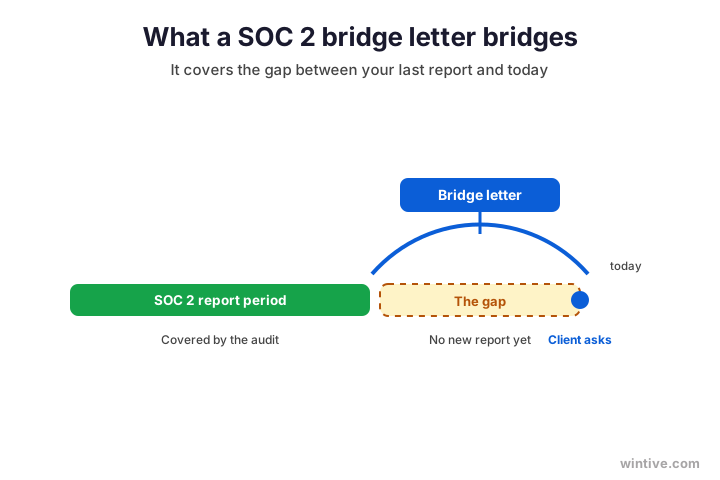
Therefore, hold that picture in mind and the rest is simple. The whole point of a SOC 2 bridge letter is to reassure a client across that gap. As a result, it is a small document with a very specific job.
Notably, the gap is normal, not a red flag. Every company on an annual report has one between cycles. As a result, asking for a bridge letter is a routine part of a buyer’s due diligence, nothing to worry about.
Therefore, the first thing to do when a client asks is to check your dates. Find when your report period ended and count the gap to today. As a result, you immediately know whether you even need a SOC 2 bridge letter or can just send the report itself.
📝 What a SOC 2 bridge letter contains
Next, what actually goes in it. A SOC 2 bridge letter is short, usually under a page, with a handful of plain parts. So there is nothing intimidating about drafting one.
Importantly, the heart of the letter is a simple assertion: since the report period ended, no controls have materially changed. Therefore, most of the document is a clear statement of that fact, plus the dates it covers.
Specifically, it names the report it extends, states the exact gap dates, asserts no material changes, gives management’s word, and carries a signature and date. The chart lays out the five parts.
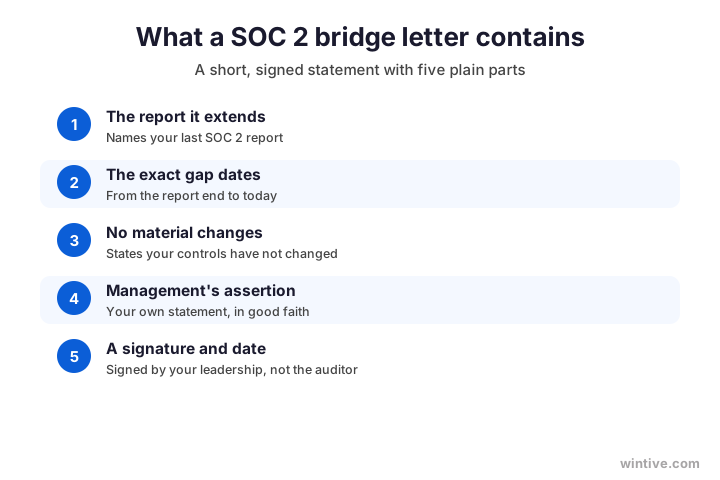
As a result, anyone in your leadership can put one together quickly. There is no testing, no fieldwork, and no auditor sign-off involved. So the document is far simpler than the report it supports, which is exactly why founders are often surprised at how little there is to it.
Notably, honesty is the only hard rule. If something did change, you say so rather than glossing over it. As a result, the letter keeps its value precisely because clients trust it to be straight.
Therefore, keep the wording tight and factual. A SOC 2 bridge letter is not the place for marketing language or vague reassurance. As a result, a plain, dated, signed statement reads as far more credible than a polished one that says less.
👤 Who issues a SOC 2 bridge letter?
Of course, the most common question is who writes it. The answer surprises many founders: you do. Your own management issues and signs the SOC 2 bridge letter, not the auditor who produced your report.
Importantly, this matters because it changes who you wait on. Since it is your statement, you do not need the audit firm to draft it for you. Therefore, you control the timing, which is exactly why it is so useful mid-deal.
Specifically, a SOC 2 bridge letter is a self-attestation, not a mini-audit. No one re-tests your controls. The chart clears up the myth versus the reality.
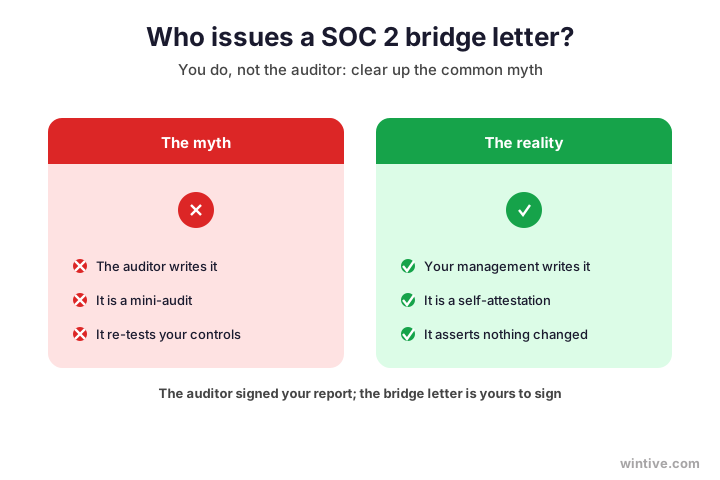
As a result, the responsibility, and the credibility, sits with your leadership. You are vouching for your own controls in writing. So the letter is only as trustworthy as the honesty behind it.
Notably, some audit firms will still provide a template or guidance. That is helpful, but the signature is yours. As a result, treat any template as a starting point, then make the statement genuinely true for your business.
Therefore, decide in advance who in your leadership signs. Usually it is a founder, an executive, or whoever owns security. As a result, when a client asks, you are not scrambling to work out who has the authority to put their name to it.
📅 When do you need a bridge letter?
Meanwhile, you only need one in a specific situation. Usually three things are true at once, and they tend to line up during a sale or a renewal. So the trigger is almost always a customer, not a calendar.
Importantly, the three conditions are simple: your last report has aged past its period, a client wants current assurance, and your next report is not ready yet. Therefore, when all three line up, a bridge letter keeps the deal moving.
Specifically, the chart shows the three conditions that, together, mean it is time for a bridge letter.
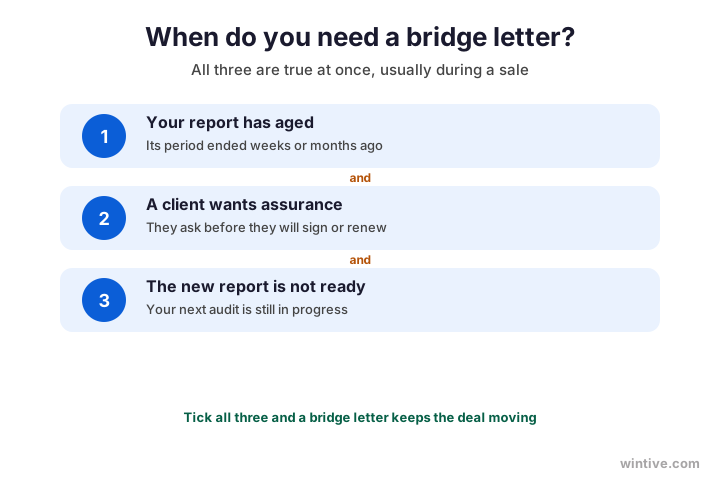
As a result, you rarely need one out of the blue. It is almost always a buyer’s question that triggers it. So the smartest move is to expect the request whenever you sell between audit cycles.
Notably, if your report is still current, you do not need a letter at all. You simply share the report itself. As a result, keeping your SOC 2 current is the surest way to avoid the gap in the first place.
Therefore, watch the calendar as your report ages. Once its period has been closed for a while, expect questions on your next big deal. As a result, having a SOC 2 bridge letter ready to issue means a buyer’s request never catches you off guard.
⚠️ What a SOC 2 bridge letter cannot do
Of course, a SOC 2 bridge letter has real limits, and pretending otherwise gets companies into trouble. It buys time, but it does not do the job of an audit. So it pays to know exactly where it stops.
Importantly, three limits matter most. It is not an audit, so no one independently tests your controls. It covers only a short window. And it never replaces the real report. Therefore, lean on it briefly, not as a long-term crutch.
Specifically, the chart sets out what a bridge letter cannot do, so you do not over-promise to a client.
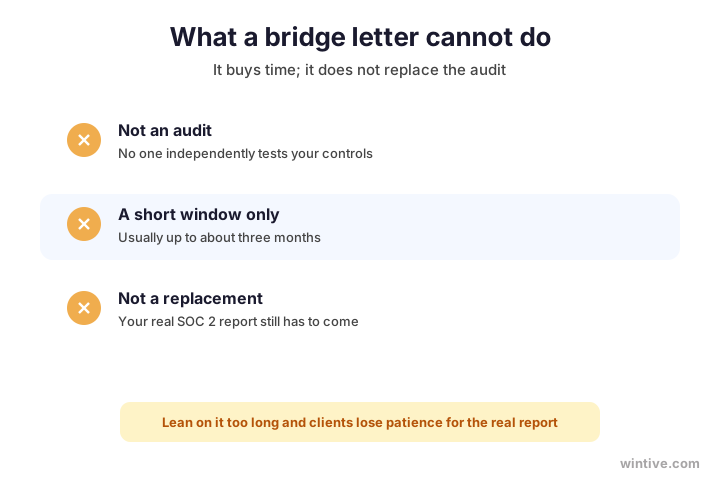
As a result, clients accept a bridge letter only for a short stretch. Stretch it too far and they will rightly push for the real report. So use it to buy weeks, not to dodge your next audit.
Notably, the three-month rule of thumb is there for a reason. The longer the gap, the less your old report says about today. As a result, a fresh audit is the only thing that truly resets the clock.
Therefore, be upfront with a client about what the letter is. Tell them plainly that it is your assertion, not a new audit, and that the real report is on its way. As a result, you set honest expectations and keep the trust the letter is meant to protect.
🛠️ How to produce a SOC 2 bridge letter
So, how do you actually produce one? Happily, because it is your own statement, the process is short. So a SOC 2 bridge letter can usually be ready in hours, not days.
Importantly, the work is mostly confirming facts, not creating evidence. You check the dates, confirm nothing material changed, write a short paragraph, and get it signed. Therefore, the effort is light, as long as you can honestly stand behind it.
Specifically, you confirm the gap, check for changes, draft the statement, get it signed, and send it over. The chart lays out the five steps.
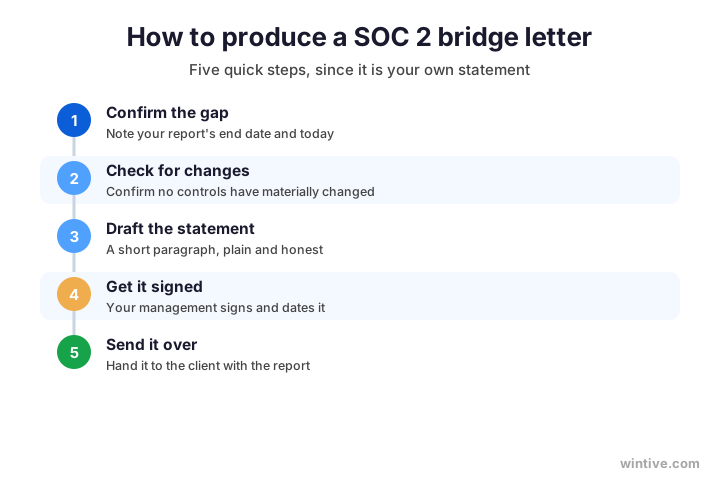
Therefore, the only step that needs real care is checking for changes. If your controls genuinely held steady, the rest is paperwork. So the harder your controls run on their own, the faster this whole step goes.
Wintive insight. The companies that breeze through a bridge-letter request are the ones whose controls actually stayed strong between audits, and they almost always run on a well-managed Microsoft 365. Because their access, encryption, and monitoring kept working, signing a SOC 2 bridge letter is a five-minute formality, not an anxious guess. The teams that struggle are the ones who let things drift after the audit and now cannot honestly say nothing changed. Our Master Audit keeps that drift from happening in the first place.
📄 A SOC 2 bridge letter example
Now, what does one look like in practice? Many people search for a SOC 2 bridge letter example to copy, so here is the shape of one in plain terms. So you can see the structure without the legalese.
Importantly, treat any example as a skeleton, not a script. The wording must be true for your business, and the dates and report details must be your own. Therefore, use a SOC 2 bridge letter example to get the layout, then fill in your reality.
| Part of the letter | What it says in a real example |
|---|---|
| Heading | A short note on company letterhead |
| The report | References your most recent SOC 2 report and its period |
| The gap | States the dates from the report’s end to today |
| The assertion | Confirms no material changes to controls in that gap |
| The sign-off | Signed and dated by a company officer |
As a result, a good example saves you a blank page but never the thinking. You still have to confirm the facts behind every line. So the layout is borrowed, but the assertion is entirely yours.
Notably, keep a tidy version of your own letter once you have written it. The next request will look almost identical, bar the dates. As a result, your first SOC 2 bridge letter becomes the template for every one that follows.
⚖️ A bridge letter versus your SOC 2 report
Meanwhile, it helps to be clear on how the letter differs from the report itself. They do related jobs, but they are not the same thing. So a quick comparison keeps you from over-relying on the letter.
Importantly, the report is the real proof, independently tested by an auditor. The bridge letter is your own short assurance that nothing changed since. Therefore, one carries far more weight than the other, and clients know it.
Specifically, the table sets the two side by side so the difference is obvious.
| Question | The SOC 2 report | The bridge letter |
|---|---|---|
| Who produces it | An independent auditor | Your own management |
| What it proves | Tested controls over a period | Nothing changed since then |
| How long it lasts | Its full report period | A short gap, often three months |
| How much weight | The real proof | A short-term reassurance |
As a result, never let a bridge letter stand in for a report that should be renewed. Clients tolerate the gap briefly, then expect the real thing. So the letter is a bridge to the next report, not a permanent stand-in.
Notably, a sharp procurement team reads both documents differently. They file the report as evidence and the letter as a promise. Therefore, the more your report has aged, the harder they lean on the promise. As a result, a current report always beats the strongest bridge letter you could write.
🔁 How to avoid needing one at all
Of course, the best bridge letter is the one you never have to send. If your SOC 2 report is always current, a client can simply read the report. So staying on a steady audit cycle quietly removes the whole problem.
Importantly, the way to stay current is to keep your controls running smoothly between audits. When access, encryption, and monitoring never drift, your next report comes easily and on time. Therefore, the gap stays small and the letter stays rare.
Notably, this is where running on Microsoft 365 helps most. The same tools that earned your report keep producing evidence on their own, from sign-in records to activity logs. As a result, your security holds between cycles without constant effort, and your next audit starts from a position of strength.

Therefore, treat the bridge letter as a safety net, not a routine. Aim to keep your report fresh so you rarely reach for it. As a result, you answer clients with the real report far more often than with a stop-gap.
Notably, a steady audit cycle also signals maturity to your buyers. A vendor whose report is always current looks more reliable than one forever bridging a gap. As a result, staying on schedule is not just easier; it quietly strengthens your security pitch.
🪤 Common bridge letter mistakes
Finally, a few mistakes trip up companies again and again. First, many assume the auditor will write it and lose days waiting, when they could have signed it themselves. Therefore, remember that the SOC 2 bridge letter is yours to issue.
Furthermore, others stretch a letter for far too long, using it to delay a report that is overdue. That erodes client trust fast, and a savvy buyer will notice the report never actually arrives. Therefore, treat the letter as a short bridge, not a way to skip the next audit.
Notably, the worst mistake is asserting no changes when something did change. That turns a reassurance into a liability, because you have put your name to something untrue. Therefore, only sign a SOC 2 bridge letter you can honestly stand behind, and if something did change, say so plainly instead.

As a result, the safest habit is to slow down for one minute before signing. Re-read the assertion and ask whether it is genuinely true today. So a moment of honesty up front protects the trust the whole letter depends on, and the client relationship behind it.
✅ Your SOC 2 bridge letter recap
Condensed, here is the SOC 2 bridge letter in plain terms, to keep on hand for the next client request.
- A bridge letter spans the gap between your report and today.
- Your own management writes and signs it, not the auditor.
- Its core claim is that no controls have materially changed since.
- It is a self-attestation, not an audit or a re-test.
- Expect it to cover only about three months at most.
- It buys time but never replaces your real SOC 2 report.
- You need one when a client asks between audit cycles.
- Keeping your report current is the best way to avoid one.
Ultimately, at Wintive we keep US small businesses SOC 2 ready on the Microsoft 365 they already run, so your report stays current and a SOC 2 bridge letter is a rare, quick formality. Moreover, when you do need one, we help you produce it correctly. To get started, contact us for a free consultation. It is quick, and we do the rest.
📚 More for compliance-minded SMBs
Therefore, these published Wintive guides go deeper on the topics a SOC 2 bridge letter raises next. So bookmark the ones that fit your business.
🔒 Keep your SOC 2 current so the gap never costs you a deal
The M365 Master Audit is a full Microsoft 365 security audit for a US small business. Specifically it reviews your identity, email, device, and data controls, maps them to the SOC 2 criteria, finds every gap, and ranks the fixes by real risk. As a result your controls stay strong between audits, so a SOC 2 bridge letter is a quick formality rather than a scramble.
❓ Frequently Asked Questions
It is a short statement, also called a gap letter, that bridges the time between the end of your last SOC 2 report’s period and the date a client asks for assurance. It asserts that nothing material has changed in your controls since the report.
Your own management writes and signs it, not the auditor. It is a self-attestation, so you do not need the audit firm to produce it. That is why you can usually turn one around quickly during a deal.
Usually up to about three months. The longer the gap since your report, the less it can credibly say about today, so clients accept a bridge letter only for a short window before they expect a fresh report.
No. A bridge letter is a self-attestation from your management that nothing changed; an audit independently tests your controls over a period. The letter buys time, but it never replaces the tested SOC 2 report.
It names the report it extends, states the exact gap dates, asserts no material changes to controls, gives management’s assertion, and carries a signature and date. It is short, usually under a page.
Audit firms and templates online give the basic layout, but treat any SOC 2 bridge letter example as a skeleton. The dates, the report details, and the assertion must all be true for your own business before you sign it.
🧭 Your next step
Want to keep your SOC 2 current so a bridge letter never holds up a deal? First, book a short call. Then we audit your Microsoft 365, keep your controls strong between cycles, and help you produce a SOC 2 bridge letter whenever you genuinely need one. There is no obligation, and the first conversation costs you nothing. To start, contact Wintive. It is quick, and we do the rest.