

SOC 2 vs ISO 27001 is the choice almost every growing US business faces once security shows up in a sales call. Both prove you protect customer data, yet they come from different worlds and suit different buyers. So picking the wrong one first can cost you time and money you did not need to spend.
However, most comparisons of SOC 2 vs ISO 27001 read like a glossary and never tell you which to actually pursue. This guide is different. Specifically, it shows what each one is, how much they overlap, who asks for which, and how much of either your Microsoft 365 already covers. It is written for a busy owner, not an auditor, so there is no jargon to wade through. It also explains why this is rarely a permanent choice, since most firms end up doing one and then the other. As a result, you finish knowing which standard to chase first, and when.
Not sure whether you need SOC 2, ISO 27001, or both?
Wintive helps US small businesses pick the right standard and get ready on the Microsoft 365 they already own. We map your controls to whichever framework your buyers want, find the gaps, and show you the fastest, cheapest path. The price is a flat monthly fee per user, with no long contract and no setup cost.
📅 Book a Free 30-Min Call | 💬 Chat on WhatsApp | See Our Plans →
🧭 SOC 2 vs ISO 27001: the short answer
SOC 2 is a US attestation report from an auditor, while ISO 27001 is a global certificate from an accredited body. For most US small businesses selling software or services, SOC 2 is the one buyers ask for first, so it is usually the right place to start. ISO 27001 matters more when you sell to global or European clients. Crucially, the two overlap heavily, so the controls you build for one carry most of the way to the other. And most of those controls already live in the Microsoft 365 you own, which keeps either path far cheaper than the vendors suggest.
Crucially, this is rarely an either-or decision forever. Many firms earn one first and add the second later when a buyer demands it. Therefore, the real question is which to start with, not which to pick for life.
Notably, the answer almost always comes down to your buyers. American clients tend to ask for SOC 2, while global and EU clients lean toward ISO 27001. Therefore, your sales pipeline points the way more clearly than any feature list. As a result, you can decide in minutes once you look at who is asking, instead of agonising over a feature-by-feature comparison that no buyer will ever read.
In practice, the cost and effort are closer than they look, because the underlying controls are mostly the same. So the choice is about which report opens doors fastest, not which one is more work. And whichever you pick, the cheapest path runs through the Microsoft 365 you already pay for.
🔍 The core difference: SOC 2 vs ISO 27001
First, the plain-English version. The main difference in SOC 2 vs ISO 27001 is what you end up holding. SOC 2 gives you an auditor’s report, while ISO 27001 gives you a formal certificate.
Importantly, that difference shapes everything else. A SOC 2 report is reviewed by a US accounting firm and shared under an agreement, while an ISO 27001 certificate is issued by an accredited body and recognised worldwide. Therefore, one feels American and contractual, the other global and official.
Notably, ISO 27001 also asks you to run a managed system for security, not just pass a check. Microsoft documents how its own cloud meets it in its ISO 27001 compliance overview. The chart sets the two side by side.
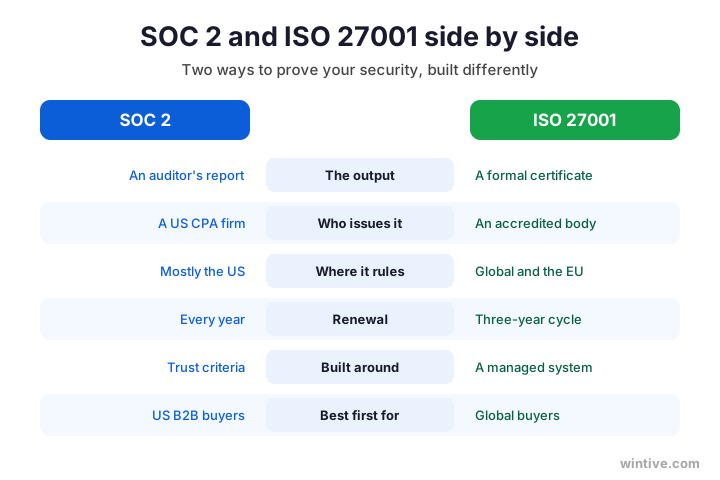
Therefore, hold that one idea and the rest follows. A report versus a certificate explains the geography, the renewal, and even the cost. As a result, the choice stops feeling technical and starts feeling practical.
Notably, neither one is simply better than the other. They are different tools for different buyers. As a result, the smart question is which one the customer in front of you actually wants.
🔁 SOC 2 vs ISO 27001: how much they overlap
Next, the best news for a small business. Despite the different labels, SOC 2 and ISO 27001 share most of the same controls. So the work you do for one is rarely wasted on the other, and the time you invest compounds rather than evaporating once the audit is done.
Importantly, this overlap is your biggest money-saver. Access rules, encryption, logging, monitoring, and vendor checks appear in both. Therefore, building a solid set of controls once sets you up for either standard. As a result, the second one always costs far less than the first.
Specifically, the unique parts are smaller than the shared core. The chart shows how much the two frameworks have in common.
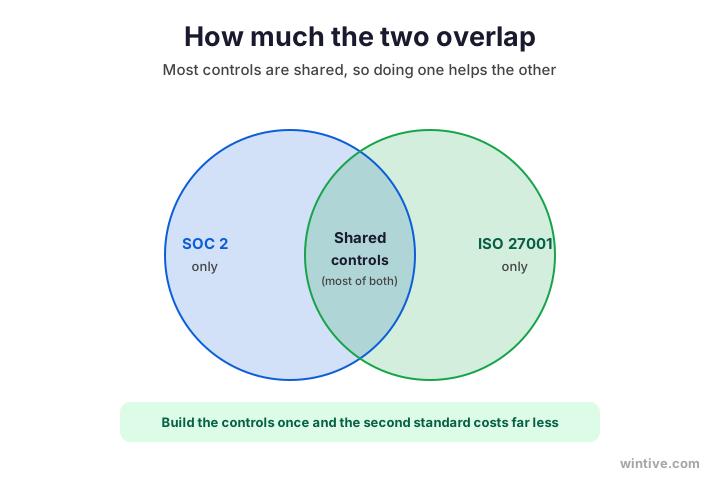
As a result, you never really have to choose one forever. Pick the report your buyers want now, and the shared work waits patiently for the other. So the overlap turns a hard decision into a simple order of operations.
Notably, the overlap is also why a single readiness audit can serve both. When someone maps your tenant once, they can flag the gaps for SOC 2 and ISO 27001 together. Therefore, you pay for one assessment and learn where you stand on two standards. As a result, the smart money checks both at the same time.
👥 SOC 2 vs ISO 27001: who asks for which
Of course, the cleanest way to choose is to follow your buyers. Different clients ask for different standards, and that pattern is remarkably consistent. So your sales calls usually answer the question for you.
Importantly, US enterprise buyers, SaaS clients, and American procurement teams almost always ask for SOC 2. Global and EU buyers, manufacturers, and public-sector tenders lean toward ISO 27001. Therefore, your market decides more than your preference does.
Specifically, if your pipeline is mostly American, SOC 2 will come up first. The chart maps which buyers tend to ask for which standard.
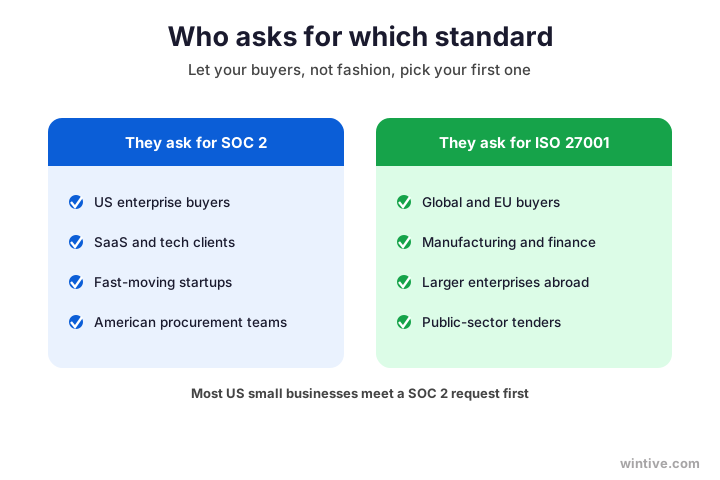
Therefore, do not guess in the abstract. Look at the security questionnaires already landing in your inbox. As a result, the right first standard is usually the one a real prospect has already named.
Notably, if both kinds of buyer appear in your pipeline, you are not stuck. You simply start with whichever deal is closer to closing, then add the other. Therefore, even a mixed market has a clear first move. As a result, the decision rarely needs more than a glance at your sales calls.
💷 SOC 2 vs ISO 27001 on cost and effort
Meanwhile, owners want to know which is cheaper. The honest answer is that they are closer than they look, because the underlying controls overlap so much. So the gap is smaller than the different reputations suggest.
Importantly, for a US small business, SOC 2 is usually the cheaper way in. It leans on tools you already own and the audit is a familiar US process. Therefore, unless a client specifically wants ISO 27001, SOC 2 is normally the better-value first step.
Specifically, the table compares the two on cost, timeline, and effort, so you can budget without guesswork.
| Question | SOC 2 | ISO 27001 |
|---|---|---|
| Rough first cost | Lower to start | Often higher up front |
| Time to the result | Weeks to months | Usually a few months |
| Main effort | Evidence and controls | A managed system plus controls |
| The second one | Cheaper, work overlaps | Cheaper, work overlaps |
As a result, the cost rarely decides this on its own. The deciding factor is which report your buyers accept, not which is a few dollars cheaper. So lead with your market, then optimise the bill, because the priciest report is the one nobody asked you to get.
Notably, whichever you start with, the biggest saving is the same: use the Microsoft 365 you already pay for instead of a new platform. As a result, the route you take matters less than the tools you build it on.
🗓️ How often you renew each one
Of course, neither standard is a one-time job. Both expect you to keep proving your security over time, but on different rhythms. So the ongoing commitment differs more than the first project does.
Importantly, SOC 2 repeats yearly, with a fresh report each year. ISO 27001 works on a three-year certificate with annual surveillance checks in between. Therefore, the calendars look different even though the day-to-day work is similar.
Specifically, both demand that your controls keep running all year, not just at audit time. The chart compares the two renewal rhythms.
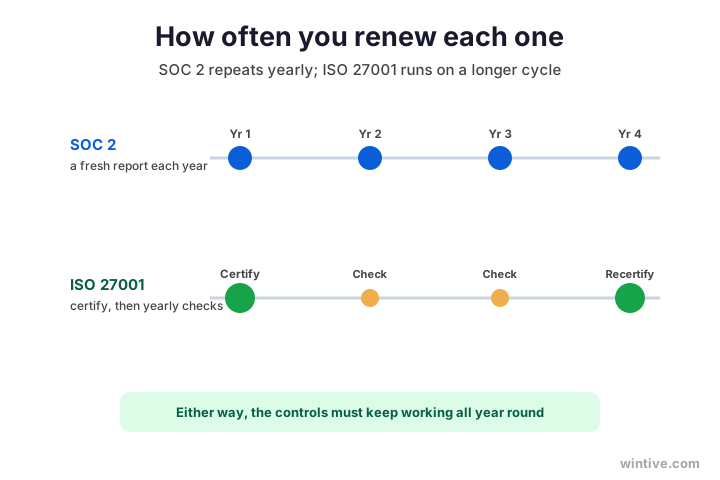
As a result, the ongoing cost depends on keeping your controls healthy, which is far easier on Microsoft 365. The tools record evidence on their own, so each renewal is lighter. So the rhythm matters less when the controls run themselves.
Notably, the different calendars rarely change the decision. A yearly report and a three-year certificate end up demanding the same daily habits. Therefore, do not let the renewal schedule alone sway you. As a result, the deciding factor stays what it always was: which proof your buyers want to see.
🟢 How your Microsoft 365 covers both
This is the part the software vendors skip. Whichever standard you choose, most of its controls already live in the Microsoft 365 you own. Therefore, you are not starting from zero for either one, and you may not need an expensive new platform at all.
Notably, this is the message vendors would rather you missed. They sell a platform that sits on top of tools you already pay for. Therefore, the honest first move is to map your tenant to whichever standard your buyers want. As a result, you often find the gap is small.
Specifically, access, encryption, logging, and monitoring satisfy controls in both frameworks at once. The chart shows how much of either standard your Microsoft 365 already covers.
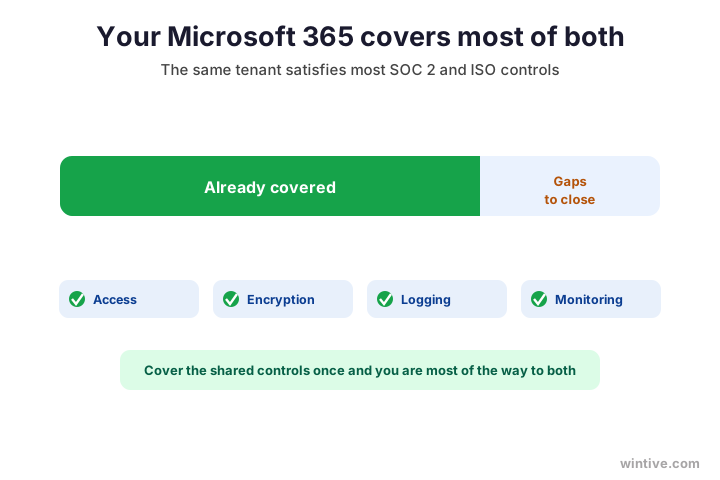
Therefore, the smartest first step is to measure what your tenant already satisfies, for both standards. As a result, you spend only on the genuine gaps, not on tools that duplicate Microsoft 365.
Wintive insight. Across the SMB tenants we audit, the firms that handle this well stop treating SOC 2 vs ISO 27001 as a fork in the road. They build the shared controls once on the Microsoft 365 they already own, earn whichever report their first big buyer asks for, and keep the evidence flowing so the second standard is a short top-up rather than a fresh project. Our Master Audit maps your tenant to both frameworks at once, so you never pay twice for the same work.
🔀 Which should you do first?
So, which should a US small business pursue first? Happily, the answer is usually clear once you stop weighing features and start watching your pipeline.
Importantly, for most US firms the order is simple: start with SOC 2 to win American deals, then add ISO 27001 when a global buyer makes it worth it. Therefore, you let real demand, not fear, decide the timing.
Specifically, you win US deals first, build the shared controls, then add ISO 27001 when an international buyer appears. The chart lays out that order.
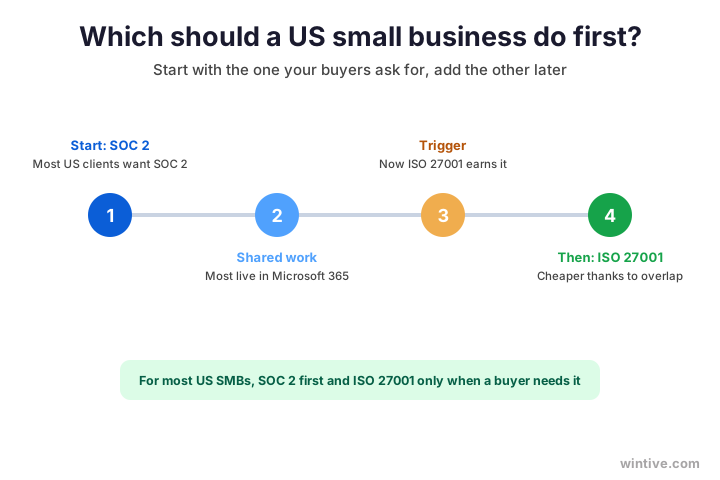
Therefore, do not over-think the sequence. Earn the report a real buyer wants now, and let the overlap make the next one cheap. As a result, you are never stuck having picked the wrong standard for life.
Notably, starting with the wrong one is rarely fatal anyway. Because the controls overlap, even a mis-step leaves you most of the way to the other. Therefore, the cost of a wrong first guess is small. As a result, it is far better to start moving than to stall while you deliberate.
🔗 Can you map one to the other?
Meanwhile, many owners ask whether the two can be mapped together. The good news is yes, and that mapping is where the savings come from. So a single control can satisfy both frameworks at once.
Importantly, mapping means you document a control one time and point it at both standards. Your access rules answer a SOC 2 criterion and an ISO 27001 control together. Therefore, the evidence is shared, not duplicated. As a result, the second audit reuses most of the first.
Specifically, the table maps a few common control areas to both frameworks, so you can see the overlap in practice.
| Control area | In SOC 2 | In ISO 27001 |
|---|---|---|
| Access and sign-in | Security criteria | Access control |
| Encryption | Security criteria | Cryptography |
| Activity logging | Security criteria | Logging and monitoring |
| Vendor checks | Security criteria | Supplier relationships |
| Incident response | Security criteria | Incident management |
As a result, a good controls list is really a shared foundation for both standards. Build it once and you answer either auditor from the same evidence. So mapping is the quiet trick that makes doing both affordable.
Notably, this is exactly where a tool like Microsoft 365 shines. Because one tenant produces the evidence both frameworks want, the mapping is half done before you start. Therefore, the platform you already run quietly carries both standards. As a result, doing both stops feeling like double the work.
🌍 The global angle on ISO 27001
Of course, geography is the clearest signal of all. ISO 27001 is an international standard, recognised the world over, while SOC 2 is rooted in the US. So where your buyers sit often settles the question before you have weighed a single other factor.
Importantly, if you sell into Europe, the Middle East, or Asia, expect ISO 27001 to come up. Many global procurement teams treat it as the default proof of security. Therefore, an international pipeline tilts the decision toward ISO 27001 sooner.
Notably, even then, you rarely abandon SOC 2. American clients still want it, so growing firms often hold both. As a result, the question is usually the order, not one instead of the other.

Therefore, read your map before you read the marketing. If your customers are mostly American, the international badge buys you little for now. As a result, geography keeps the decision grounded in real demand rather than in what looks impressive.
Notably, the picture can change fast as you grow. A single large European or Middle Eastern client can make ISO 27001 worth it overnight. Therefore, keep an eye on where your pipeline is heading, not just where it sits today. As a result, you can time the second standard to land exactly when a global buyer needs it.
📜 A certificate versus a report
Furthermore, it helps to be precise about what you actually receive. ISO 27001 ends in a certificate from an accredited body, a document you can display. SOC 2 ends in an attestation report from an auditor, shared under an agreement.
Importantly, this wording matters to a sharp procurement team. You are not SOC 2 certified; you hold a SOC 2 report. With ISO 27001 you genuinely are certified. Therefore, describe each accurately to keep your credibility in a security review.
Notably, both ultimately do the same job: they reassure a buyer that your security is real. So the format is less important than having a current, valid one to share when asked.

Therefore, focus on the trust each one buys, not the label. A live, valid report or certificate is what closes the deal. As a result, the smartest owners keep whichever one their buyers ask for current and ready.
Notably, the practical upshot is simple: do not lose a deal over a word. If a buyer says certified when they mean a SOC 2 report, give them the report and move on. Therefore, accuracy matters in writing, but flexibility matters in the sale. As a result, you stay both precise and easy to do business with.
🪤 Common mistakes choosing between them
Meanwhile, a few mistakes trip up small businesses again and again. First, many chase ISO 27001 for prestige when their buyers only ever ask for SOC 2. Therefore, they spend more and wait longer for a standard no client requested, and the deal they were chasing closes on a competitor’s SOC 2 report in the meantime.
Furthermore, others treat the two as rivals and pick one forever, missing how much they overlap. That ignores the cheapest path, which is to do one and top up to the other. Therefore, think in sequence, not in either-or, and you turn a stressful fork in the road into a simple, affordable order of operations.
Notably, the most expensive mistake is buying a compliance platform to chase either standard before checking Microsoft 365. You pay yearly for tools you may already own. Therefore, map your tenant first, then decide what, if anything, you still need. As a result, the same caution that saves money on SOC 2 saves it on ISO 27001 too.
✅ Your SOC 2 vs ISO 27001 recap
Condensed, here is the SOC 2 vs ISO 27001 decision in plain terms, to keep on hand for your next buyer conversation.
- SOC 2 is a US auditor’s report; ISO 27001 is a global certificate.
- US and SaaS buyers ask for SOC 2; global buyers lean to ISO 27001.
- The two overlap heavily, so most controls are shared.
- Do one first, and the second costs far less to add.
- SOC 2 is usually the cheaper, faster first step for US firms.
- Most controls for both already live in your Microsoft 365.
- SOC 2 renews yearly; ISO 27001 runs on a three-year cycle.
- Let your buyers, not prestige, decide which comes first.
Ultimately, at Wintive we help US small businesses choose the right standard and get ready on the Microsoft 365 they already run, as part of our managed security services. Moreover, we map your controls to SOC 2 and ISO 27001 at once, close the gaps, and hand you the evidence. To get started, contact us for a free consultation. It is quick, and we do the rest.
📚 More for compliance-minded SMBs
Therefore, these published Wintive guides go deeper on the topics the SOC 2 vs ISO 27001 choice raises next. So bookmark the ones that fit your business.
🔒 See which standard your Microsoft 365 is closest to
The M365 Master Audit is a full Microsoft 365 security audit for a US small business. Specifically it reviews your identity, email, device, and data controls, maps them to the SOC 2 criteria and the ISO 27001 controls at once, finds every gap, and ranks the fixes by real risk. As a result you get a written report and a clear path to whichever standard your buyers ask for.
❓ Frequently Asked Questions
SOC 2 is a US attestation report written by an auditor, while ISO 27001 is a global certificate issued by an accredited body. SOC 2 is built around Trust Services Criteria; ISO 27001 asks you to run a managed security system. Both prove you protect customer data.
Neither is simply better; it depends on your buyers. For most US small businesses selling software or services, SOC 2 is the report clients ask for first. ISO 27001 matters more when you sell to global or European customers.
Heavily. Access, encryption, logging, monitoring, and vendor checks all appear in both. So the controls you build for one carry most of the way to the other, which makes adding the second standard far cheaper.
For most US firms, start with SOC 2 to win American deals, then add ISO 27001 when a global buyer makes it worth it. Because the controls overlap, the order saves money rather than doubling it.
For a US small business, SOC 2 is usually the cheaper first step. It leans on tools you already own and uses a familiar US audit process. The bigger saving for either, though, is using your Microsoft 365 instead of new compliance software.
Yes. You document a control once and map it to both frameworks, so the evidence is shared rather than duplicated. A good controls list becomes a single foundation that answers either auditor.
🧭 Your next step
Want help choosing between SOC 2 vs ISO 27001 and getting ready fast? First, book a short call. Then we audit your Microsoft 365, map it to both frameworks at once, and show you the cheapest path to whichever your buyers want. There is no obligation, and the first conversation costs you nothing. To start, contact Wintive. It is quick, and we do the rest.